
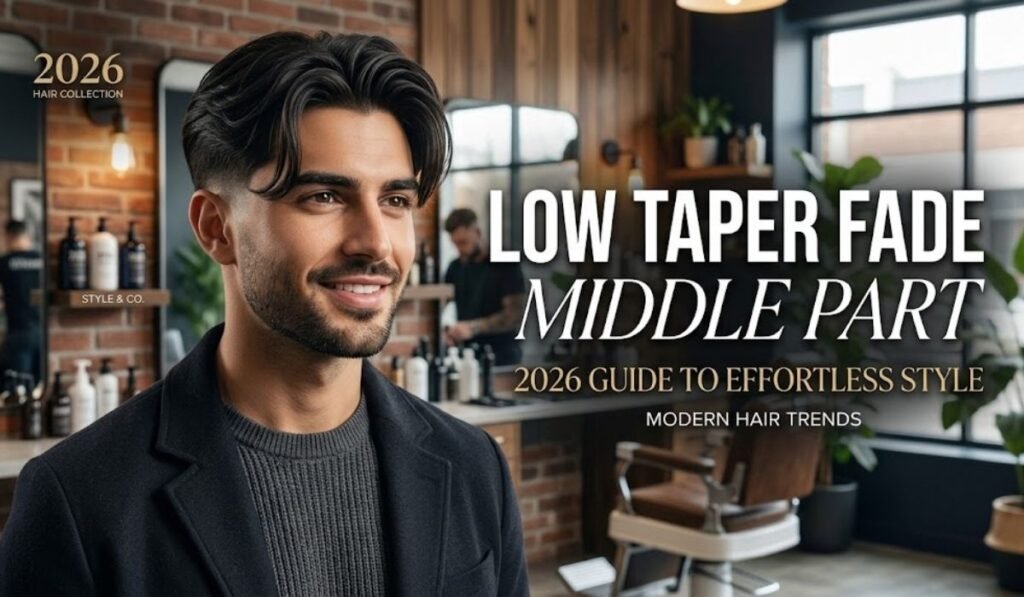
If you’ve scrolled through barbershop reels lately, you’ve seen it everywhere: clean faded sides, longer hair up top, split neatly down the center. The Low Taper Fade Middle part has quietly become one of the most requested cuts of 2026, and it’s not hard to see why. It looks polished without trying too hard, works with almost any hair type, and doesn’t demand a daily styling routine to look intentional.
This guide breaks down exactly what the cut is, who it suits, how to ask for it correctly, and how to keep it sharp between visits — no fluff, just what you need to walk into the chair with confidence.
What Exactly Is a Low Taper Fade Middle Part?
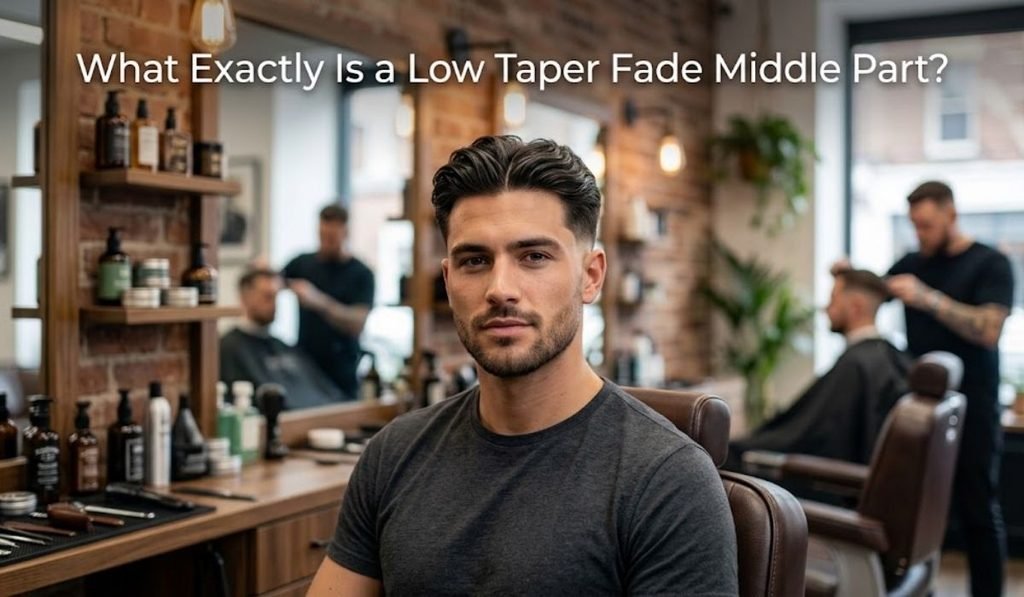
A Low Taper Fade Middle part is two haircuts working together as one. The taper starts low — right around the ears and neckline — and gradually blends the hair length upward without ever fading to bare skin. On top, the hair is left long enough (usually three to six inches) to be split down the center and fall naturally on both sides of the face.
Unlike a skin fade, a low taper keeps a soft gradient the whole way down, which is why it reads as more relaxed and low-key. Pair that with a middle part on top, and you get a style that sits somewhere between a classic barbershop cut and an effortless, undone look.
Here’s a quick breakdown of what separates it from similar cuts:
| Feature | Low Taper Fade Middle Part | Skin Fade | Mid/High Taper |
| Fade starting point | Just above the ear | Near the ear, down to skin | Temple or higher |
| Contrast level | Soft, subtle | Sharp, high contrast | Moderate to bold |
| Top length | 3–6 inches, center-parted | Varies, often shorter | 2–5 inches |
| Maintenance | Every 3–4 weeks | Every 2–3 weeks | Every 3 weeks |
| Best for | Everyday, low-key polish | Bold, statement looks | Textured, voluminous styles |
The Evolution: From ’90s Throwback to 2026 Essential
The middle part on top isn’t new — it dominated the late ’90s and early 2000s, from boy-band curtains to skater culture. What’s changed is the base underneath it. Back then, the sides were usually left long or barely trimmed. Today, the Low Taper Fade Middle part pairs that nostalgic top with a modern, clean fade underneath, which instantly makes the whole look feel current instead of dated.
K-pop styling, Pinterest-driven grooming trends, and a general shift toward “your hair, but neater” cuts have pushed this style back into heavy rotation. Barbers report booking it constantly through 2026 because it photographs well, styles quickly, and flatters a wide range of faces without needing a dramatic haircut change.
Read Related Post: 15 Best Wavy Mullet Haircuts That Are Trending in 2026
Who Does the Low Taper Fade Middle Part Suit Best?
Not every haircut works for every face or hair type, and the Low Taper Fade Middle part is no exception. It’s fairly forgiving, but a few factors decide whether it’ll look effortless or just messy.
Ideal Face Shapes
- Oval and oblong faces: The part adds width at the top, balancing longer proportions.
- Square faces: The soft part and rounded sides take the edge off a strong jawline.
- Round faces: Works well, but height and volume on top are essential — a flat, pressed-down part can widen the face further.
- Long or narrow faces: Ask your barber to leave slightly more weight at the sides so the center part doesn’t stretch the face visually.
Hair Types That Thrive
- Straight hair: Falls cleanly on either side of the part; needs a texturizing product to avoid looking flat.
- Wavy hair: Arguably the easiest texture for this cut — natural movement does most of the styling work.
- Curly hair: Works beautifully but needs enough top length (four inches or more) so curls have room to form a shape instead of shrinking upward.
- Thick hair: Needs some weight removed through point cutting, or the top can sit like a heavy block.
- Fine hair: Best kept on the shorter side of medium, paired with a lightweight mousse rather than heavy pomade.
How to Ask Your Barber for the Perfect Low Taper Fade Middle Part
Vague instructions lead to disappointing results. Barbers work off specifics, not adjectives like “medium” or “natural.” Use this script as your starting point:
- Name the cut directly: Say “Low Taper Fade Middle part,” not just “taper” or “fade.” The wording tells your barber which element leads.
- Specify the fade height: Ask for the fade to begin just above the ears and blend into the neckline — not up near the temples.
- Give a guard number: A #1 guard at the shortest point is the safe, versatile choice for this style.
- State the top length in inches: Four inches minimum for it to fall past the cheekbone; five to six for a fuller, curtain-style flow.
- Confirm it’s not a skin fade: A low taper keeps hair on the skin the whole way down — say so explicitly if you want to avoid a bald-fade finish.
- Bring one reference photo: Not five. One clear photo prevents your barber from averaging several looks into something you didn’t ask for.
- Mention your hair type and maintenance schedule: This helps your barber choose the right cutting technique and product recommendations.
Step-by-Step: Styling Your Low Taper Fade Middle Part at Home
You don’t need a professional blowout every morning to keep a Low Taper Fade Middle part looking sharp. A consistent routine does most of the work.
- Start with damp, not soaking wet, hair. Towel-dry after your shower until hair is just slightly moist — this is the ideal state for even product distribution.
- Apply a lightweight styling product. A texturizing cream or light mousse works best; heavy pomades can weigh down the part.
- Find your part with a comb. Run a fine-tooth comb from the front hairline back to locate your natural part line.
- Blow-dry away from the part. Point the dryer nozzle downward and pull hair away from center on both sides for a few minutes.
- Set with a light-hold spray. This locks the shape in without making hair feel stiff or crunchy.
- Finger-comb for texture. A quick tousle at the end keeps the look natural instead of overly styled.
Top Trending Styles to Elevate Your Low Taper Fade Middle Part
The base cut stays consistent, but there’s real room to customize the top and finish. Here are six variations worth showing your barber.
Messy Flow Middle Part

A relaxed, undone version where the top is left slightly longer and tousled rather than combed flat. Great for wavy or curly hair types that already have natural movement.
Blowout Low Taper
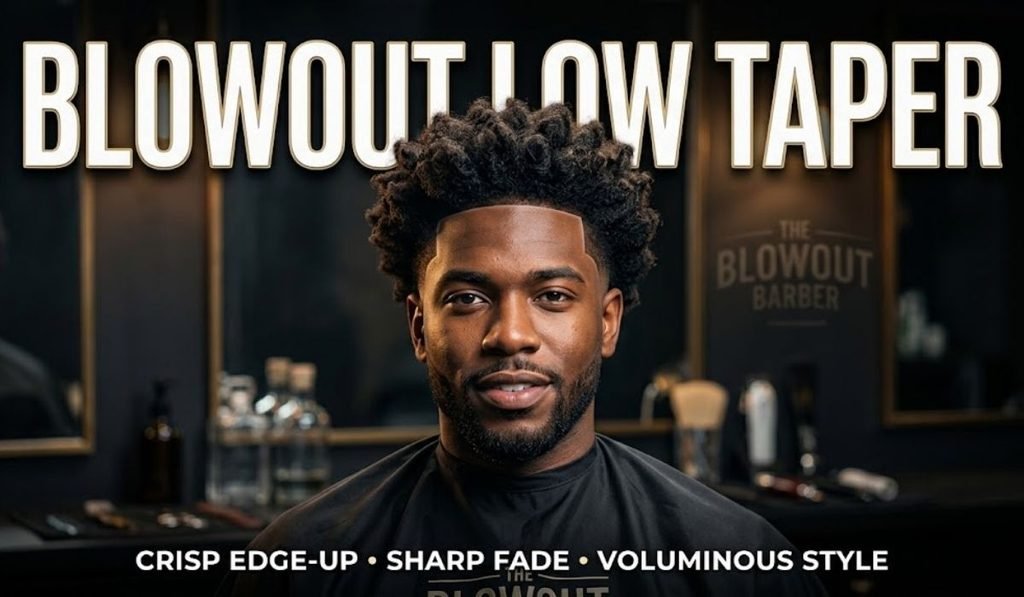
Adds height and volume through blow-drying technique, giving the top more lift before it splits into the part. Works especially well on thicker hair.
Textured with Highlights
Subtle balayage or face-framing highlights add dimension to the part line, making the style pop in photos and under natural light.
Curtains with Beard Fade

Pairs the classic curtain-style middle part with a beard that fades to match the taper on the sides, creating one cohesive, blended look.
Short Low Taper Middle

A cropped version with only two to three inches on top, ideal for guys who want the look without committing to longer hair.
Wolf Cut Fusion
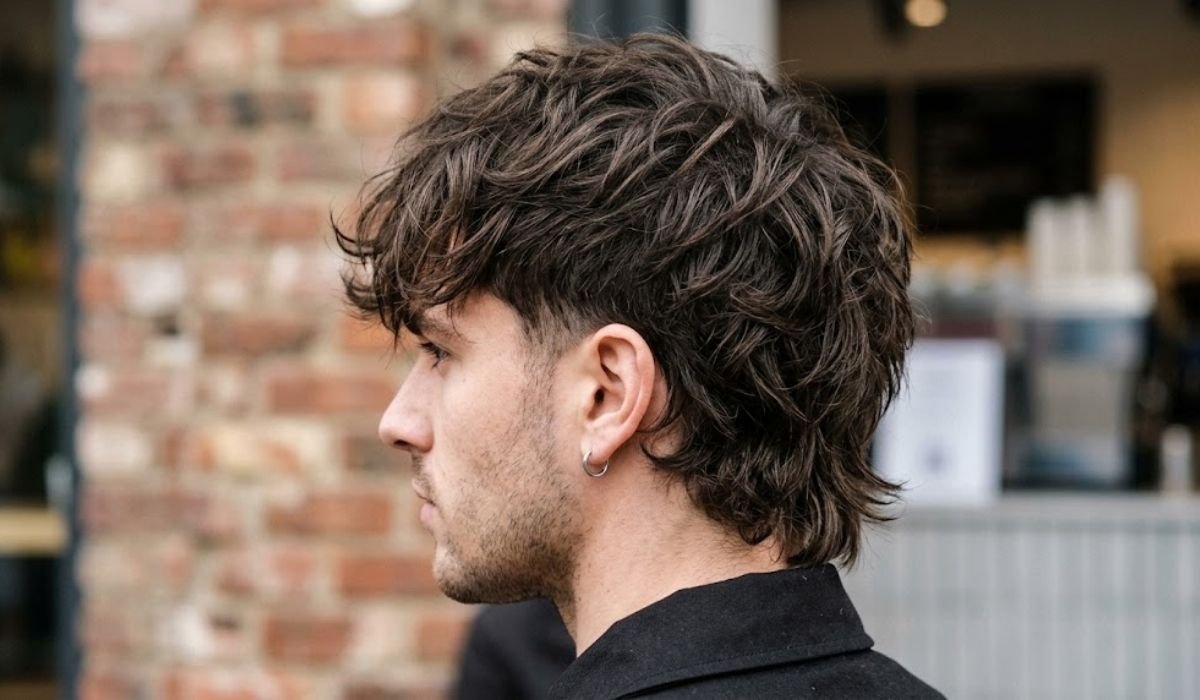
Combines shaggy, layered texture with a center part over a low taper — a shaggier, edgier take that’s trended heavily alongside mullet-inspired cuts.
Celebrity Inspirations: Stars Rocking the Low Taper Fade Middle Part
Plenty of musicians, athletes, and actors have popularized versions of this cut over the past few style cycles — from K-pop idols favoring soft curtain fringes to actors adopting a cleaner, center-parted look for red carpet appearances. The common thread across all of them is the same: a low, subtle fade underneath that lets the top styling do the visual work, rather than competing with a high-contrast fade.
Pros and Cons: Is It Right for Your Lifestyle?
The Wins
- Versatile enough for office settings and weekend wear alike
- Flatters a wide range of face shapes and hair textures
- Regrowth stays subtle, so you can stretch appointments to three or four weeks
- Styles quickly once you learn your routine
- Pairs well with beards, highlights, and various top lengths
The Drawbacks
- Requires enough top length to work, so it’s not ideal right after a very short cut
- Thick or curly hair may need extra thinning to avoid bulk
- Flat parts can widen round faces if volume isn’t maintained
- Needs a slightly more involved routine than a simple buzz cut
Maintenance Mastery: Keep Your Cut Looking Fresh
A Low Taper Fade Middle part typically needs a trim every three to four weeks. The fade loses its clean gradient faster than the top grows out, so sticking to a schedule matters more than most people realize. Waiting six or seven weeks between visits is one of the fastest ways to make the cut look unintentional rather than styled.
Between visits:
- Wash with a sulfate-free shampoo two to three times a week to avoid stripping natural oils
- Use a light conditioner focused on the ends, not the roots, to keep the top from going flat
- Sleep on a satin or silk pillowcase to reduce frizz and preserve the part overnight
- Comb the part back into place each morning before applying product
Must-Have Products for Low Taper Fade Middle Part Perfection
| Product Type | Purpose | Best For |
| Texturizing cream | Adds definition without stiffness | Straight or wavy hair |
| Lightweight mousse | Builds volume at the root | Fine or thin hair |
| Curl-defining cream | Enhances natural curl pattern | Curly hair types |
| Matte paste | Low-shine hold for the top | Thick or coarse hair |
| Light-hold spray | Locks the part in place | All hair types |
| Beard oil | Keeps beard fade looking groomed | Curtains with beard fade |
Common Pitfalls: Mistakes to Dodge for Flawless Results
- Skipping regular trims: An overgrown fade stops looking like a taper and starts looking like neglect.
- Using too much product: Heavy pomade weighs the top down and flattens the part.
- Brushing curly hair when dry: This breaks up curl definition; scrunch and air-dry instead.
- Not communicating hair type to your barber: The cutting technique changes significantly between straight, wavy, and curly hair.
- Choosing a skin fade by mistake: Confirm with your barber that you want hair retained on the sides, not a fade to bare skin.
- Ignoring face shape: A flat, centered part can visually widen a round face if volume isn’t kept on top.
FAQ’s
What is the difference between a low taper and a mid taper fade?
A low taper starts just above the ear and blends into the natural hairline. A mid taper begins higher, around the temple, creating more contrast between the top and sides.
Can I get a middle part with thin hair?
Yes. Use a lightweight volumizing mousse and keep the top at a medium length so the part holds without looking flat.
How often should I trim a low taper fade?
Every three to four weeks is ideal to keep the fade’s gradient looking clean and intentional.
What should I tell my barber for a low taper fade middle part?
Ask for a Low Taper Fade Middle part starting just above the ears, blending to the natural hairline, with enough top length to part down the center.
Is the low taper fade middle part good for curly hair?
Yes, as long as you leave at least four inches on top so your curls have enough length to form a defined shape.
Conclusion
The Low Taper Fade Middle part earns its popularity honestly, it’s low-maintenance without looking careless, and sharp without looking stiff. Whether you have straight, wavy, or curly hair, the formula stays the same: a soft fade underneath, enough length on top to work with, and a consistent trim schedule to keep it from growing out of shape.
Bring a clear reference photo, use the barber script above, and you’ll walk out with a cut that actually matches what you pictured — not a rough approximation of it.

I’m Joyce
I’m an SEO-focused writer and content creator with experience in creating useful, search-friendly content that helps readers find the information they are looking for. I enjoy researching trends, understanding what people search for, and turning that research into clear and helpful articles.
At Curl Slayers, I focus on haircuts, hairstyles, fades, and curly hair. I research modern hair trends, different haircut styles, and practical styling ideas to help readers discover fresh looks and choose styles that suit them.
My goal is simple: to make hair inspiration easier to find, understand, and use. Whether you’re looking for a new haircut, a clean fade, a trendy hairstyle, or ideas for your curls, Curl Slayers is here to help you find your next look.

1 thought on “The Ultimate Low Taper Fade Middle Part 2026 Guide to Effortless Style”