
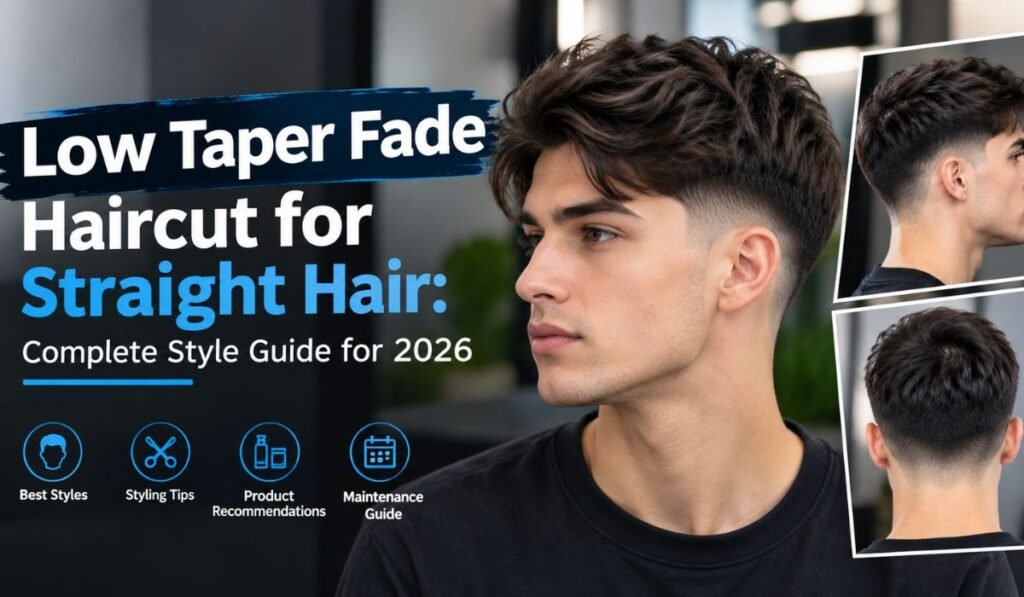
Straight hair and a low taper fade are one of the easiest combinations to get right at the barbershop. The lines stay sharp, the blend looks clean, and the top can be styled a dozen different ways without much effort. If you’ve been searching for the perfect fade haircut for straight hair, this guide breaks down everything you need — from what the cut actually is, to styling, products, and the mistakes that ruin an otherwise great haircut.
Whether you’re walking into a barbershop for the first time or just want to fine-tune your current look, this guide gives you a straight answer without the fluff. We’ll cover the exact terminology to use with your barber, the top styles trending this year, and the small maintenance habits that keep the cut looking fresh between appointments.
What is a low taper fade?
At its core, a taper fade is about gradual change in length. The word “low” simply tells the barber where that change begins. Instead of fading near the temples like a mid or high fade, the clipper work stays close to the natural hairline, right around the ears and down the back of the neck.
A low taper fade is a haircut where the hair gradually shortens from mid-length on top down to very short (or skin) near the ears, sideburns, and neckline. Unlike a mid or high fade, the fading action stays low on the head, close to the natural hairline, which keeps the overall look subtle and professional.
For anyone with smooth, straight strands, this cut is often described as the ideal fade haircut for straight hair because the transition lines show up cleanly without the disruption that curls or coils can cause.
Key features of a low taper fade:
- The fade starts around the ears, not the temples
- Hair on top stays longer, usually 2–4 inches
- The blend is subtle, not dramatic
- Works for formal, casual, and professional settings
Because the fade zone is small, a fade haircut for straight hair is also faster to maintain between barber visits compared to high or skin fades.
Why straight hair suits this cut
Straight hair has a natural advantage when it comes to fading. Since each strand lies flat and grows in one direction, the barber’s clippers create crisp, visible lines with almost no extra effort. This is one of the biggest reasons the fade haircut for straight hair trend keeps growing every year.
Here’s why the pairing works so well:
- Sharper lines – Straight strands don’t hide the taper line the way curly or coily hair can.
- Easier blending – Clippers glide through straight hair evenly, creating a smoother gradient.
- More styling options – Straight hair falls naturally into slick-backs, side parts, and textured crops.
- Lower product need – You don’t need heavy creams to control frizz, so styling stays quick.
- Faster daily upkeep – A comb and a small amount of product is often all it takes.
If your hair is fine and straight, the fade will look neat but may need a texturizing product for volume. If it’s thick and straight, the top will hold shape longer and the fade will look more dramatic against the density.
Low taper fade vs low fade vs taper
People often mix these terms up, so here’s a simple breakdown before you book your next haircut.
| Style | Fade Zone | Skin Showing? | Best For |
| Taper | Only at the neckline and around the ears | No | Conservative, workplace-friendly looks |
| Low Fade | Starts just above the ears, blends upward | Sometimes near the bottom | A slightly bolder version of a taper |
| Low Taper Fade | Combines both — soft taper with a low, blended fade | Rarely, unless requested | The most versatile fade haircut for straight hair |
The main difference is intensity. A plain taper barely fades at all — it just tidies the edges. A low fade brings more contrast near the hairline. A low taper fade sits in between, giving you a clean look without the sharp contrast of a mid or high fade.
If you’re unsure which to choose, a low taper fade is the safest option because it works in almost every setting — school, office, weddings, or casual outings.
Read Related Post: Low Taper Fade Long Hair: 35 Best Styles for Every Face Shape & Hair Type
Best top styles for straight hair in 2026
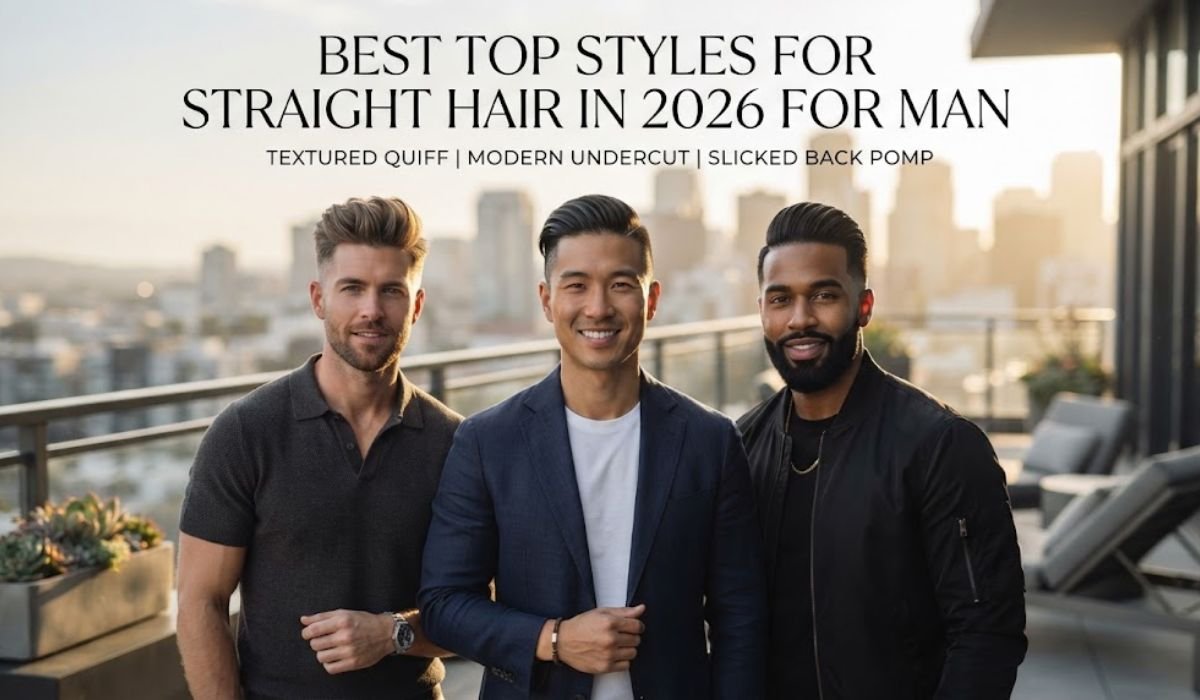
The beauty of a fade haircut for straight hair is how many top styles it can support. Here are the trending options for 2026:
- Textured crop – Short, choppy layers on top with a matte finish
- Side part – A classic, polished look with a defined line
- Slick back – Straight hair combed backward using a light-hold pomade
- Comb-over fade – A longer front section swept to one side
- Quiff – Volume at the front, tapered sides for contrast
- French crop fringe – A blunt fringe paired with a low taper fade
- Textured fringe – Choppy bangs with natural movement
Each of these pairs naturally with straight hair because the strands hold their shape without excess frizz, making the fade haircut for straight hair look sharp from every angle.
Best face shapes and hair types
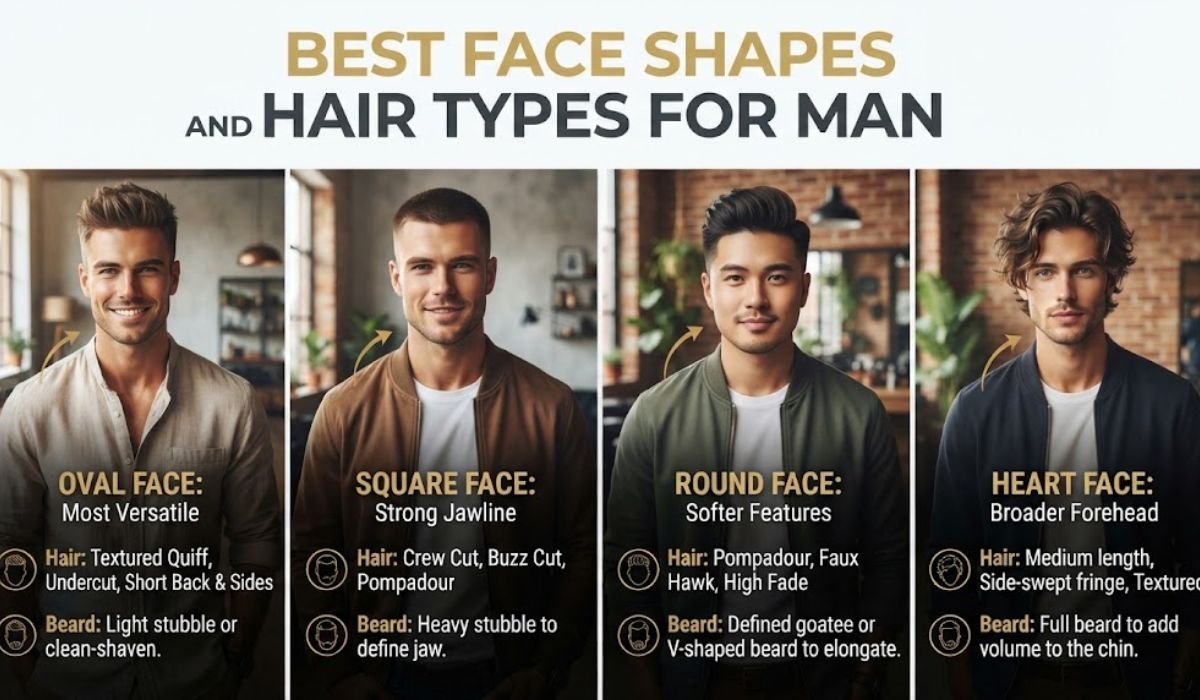
A low taper fade adapts well to most face shapes, but small adjustments make a big difference in how flattering it looks.
| Face Shape | Recommended Top Style |
| Round | Textured crop or quiff for added height |
| Square | Side part or slick back to soften angles |
| Oval | Almost anything works — comb-over or fringe |
| Diamond | Textured fringe to balance cheekbones |
| Rectangular | Fringe or crop to reduce forehead length |
For hair type, here’s how a fade haircut for straight hair performs across textures:
- Fine straight hair – Needs a texturizing spray for volume; avoid heavy pomades
- Thick straight hair – Holds shape well; ideal for quiffs and crops
- Medium straight hair – The most flexible; works with nearly every top style listed above
It’s worth noting that hair density matters just as much as texture. Someone with thin, straight strands may need a slightly longer guard on top to avoid looking too flat, while someone with dense, straight hair can go shorter and still keep visible shape. A barber experienced with a fade haircut for straight hair will usually check density before deciding on the final guard length.
How to ask your barber for a clean low taper fade
Communication makes or breaks a fade. Use these tips to get the exact fade haircut for straight hair you’re picturing:
- Show a clear reference photo, ideally of someone with similar hair texture
- Specify the fade height — “low,” starting just above the ears
- Mention the guard number you want on top, if known (usually a 4 or 5 for medium length)
- Ask for a “blend” instead of a hard line if you prefer a softer transition
- Confirm whether you want the neckline squared off or rounded
A good barber will check your hair growth pattern and cowlicks before cutting, since these affect how the fade sits on straight hair.
Short, medium, and long variations
A fade haircut for straight hair isn’t one fixed style — it scales with your preferred length on top.
Short variation
- Top length: 1–2 inches
- Low maintenance, dries in minutes
- Best for gym-goers and hot climates
Medium variation
- Top length: 2–4 inches
- Enough length for a side part, quiff, or comb-over
- The most requested length for 2026
Long variation
- Top length: 4+ inches
- Works for slicked-back looks or textured fringes
- Requires more frequent styling but offers more versatility
Whichever length you pick, the fade zone at the sides stays consistent — only the top length changes.
How to style it
Styling a fade haircut for straight hair is straightforward once you know the basic steps:
- Start with damp hair – Towel-dry until it’s about 70% dry.
- Apply product evenly – A dime-sized amount of pomade, clay, or cream, rubbed between palms first.
- Use a comb or fingers – Combs give sharper, defined looks; fingers give a more natural texture.
- Blow-dry for volume – Use a low-heat setting and a round brush if you want lift at the roots.
- Set with light hold spray – Optional, but helps the style last through the day.
Straight hair responds fast to styling since there’s no curl pattern to fight against, which is another reason a fade haircut for straight hair is considered low-effort compared to other textures.
One extra tip: if your hair has any natural fall or cowlick near the crown, style against that direction first before smoothing it into place. This gives the top more lift and stops the style from collapsing halfway through the day. A quick touch-up with a small amount of product at midday is usually all that’s needed to keep the look sharp.
Best products for straight hair
Choosing the right product depends on the finish you want.
| Product Type | Best For | Finish |
| Matte clay | Textured crops, fringes | Matte, strong hold |
| Water-based pomade | Slick backs, side parts | Shiny, medium-high hold |
| Texturizing spray | Fine straight hair needing volume | Natural, lightweight |
| Light-hold cream | Everyday casual looks | Soft, natural movement |
| Hair wax | Spiky or piecey styles | Semi-matte, strong hold |
Avoid heavy oils or greasy products, as straight hair can look flat and weighed down quickly. A little goes a long way with any fade haircut for straight hair.
How to maintain it at home
Between barber visits, a few small habits keep the cut looking sharp:
- Trim touch-ups every 2–3 weeks to keep the fade line crisp
- Use a neck trimmer for minor hairline cleanup at home
- Wash 2–3 times a week with a sulfate-free shampoo to avoid dryness
- Comb daily to train the hair direction, especially on top
- Avoid over-washing, which can strip natural oils and cause flyaways
A well-maintained fade haircut for straight hair typically needs a barber visit every 3–4 weeks to stay looking fresh.
It also helps to keep a small comb and a travel-size product on hand for touch-ups during the day, especially if you’re active or spend time outdoors. Straight hair can shift out of place with sweat or humidity, but it’s just as quick to reset since there’s no curl pattern working against you.
Common mistakes to avoid
Even a great haircut can look off if these mistakes creep in:
- Skipping regular trims – The fade grows out unevenly and loses its shape fast.
- Using too much product – Straight hair gets weighed down quickly, killing volume.
- Choosing the wrong guard length – Going too short on top can clash with a low fade.
- Ignoring face shape – Not every top style flatters every face.
- DIY fading without practice – A botched fade line is hard to fix without going shorter overall.
- Not communicating clearly with the barber – Vague requests lead to disappointing results.
Avoiding these keeps your fade haircut for straight hair looking sharp for weeks, not just the first few days.
FAQ’s
Is a low taper fade good for straight hair? Yes, straight hair creates cleaner fade lines and blends more evenly than curly or wavy textures.
How often should I get a low taper fade trimmed? Every 3–4 weeks keeps the fade sharp and prevents it from growing out unevenly.
Can fine straight hair handle a low taper fade? Yes, but pair it with a texturizing product to avoid a flat, lifeless look on top.
What’s the difference between a taper and a fade? A taper only shortens hair slightly near the edges; a fade blends hair down to very short or skin.
Does a low taper fade suit all face shapes? Yes, since the fade sits low, it’s flattering across round, square, oval, and rectangular faces.
Can I style a low taper fade without heat tools? Yes, a comb and light-hold product are usually enough for straight hair.
Is this haircut good for the office? Yes, a low taper fade is considered one of the most professional-friendly fade styles.
Conclusion
A low taper fade remains one of the most reliable, versatile cuts for anyone with smooth, straight strands. It blends easily, styles quickly, and works across nearly every face shape and hair density. Whether you keep it short and low-maintenance or grow the top out for more styling options, a well-executed fade haircut for straight hair is a look that stays sharp season after season.
The best results come down to three things: choosing a top style that fits your face shape, using the right amount of product for your hair density, and staying consistent with trims every few weeks. Get those right, and this cut will carry you through any occasion in 2026, from the office to the weekend. Bring a clear reference photo to your next appointment, ask for a low blend near the ears, and let your barber take it from there.

I’m Joyce
I’m an SEO-focused writer and content creator with experience in creating useful, search-friendly content that helps readers find the information they are looking for. I enjoy researching trends, understanding what people search for, and turning that research into clear and helpful articles.
At Curl Slayers, I focus on haircuts, hairstyles, fades, and curly hair. I research modern hair trends, different haircut styles, and practical styling ideas to help readers discover fresh looks and choose styles that suit them.
My goal is simple: to make hair inspiration easier to find, understand, and use. Whether you’re looking for a new haircut, a clean fade, a trendy hairstyle, or ideas for your curls, Curl Slayers is here to help you find your next look.

1 thought on “Low Taper Fade Haircut for Straight Hair: Complete Style Guide for 2026”