
Getting your son to sit still for a haircut is hard enough. Getting him to actually like the result? That’s the real challenge. If he’s been begging for something different from the same round trim he’s had since kindergarten, the Boys Mullet Haircut is probably the reason why.
This cut has moved way past its old-school reputation. The 2026 version is neat on the sides, textured on top, and just long enough at the back to feel fun. It works for school mornings, weekend games, and everything in between. This guide walks through what the cut actually is, how to pick the right version for your kid, twelve popular styles, and how to keep it looking sharp between trims.
What Is a Boys Modern Mullet
A boys mullet haircut is built on one simple idea: short and tidy up front, a bit more length left at the back. That’s it. No mystery, no drama.
The modern version is nothing like the choppy cuts from old photo albums. Barbers now blend the sides with a taper or fade, add texture on top with layered scissor work, and let the back flow instead of dropping off in a hard line. The result reads as intentional, not accidental.
Here’s what typically defines the look:
- Short to medium sides — tapered, faded, or just trimmed close
- Textured top — enough length to style, not enough to flop into the eyes
- Longer back — anywhere from barely-there to collar-length
- Smooth blending — no harsh line between the short and long sections
Straight, wavy, or curly, this cut adapts to nearly every hair type. That flexibility is a big reason the Boys Mullet Haircut keeps showing up in barbershops heading into 2026.
How to Choose the Right Version
Not every Boys Mullet Haircut suits every kid. Three things decide which version works best: hair texture, age, and how much styling effort your son will actually put in.
Quick questions to ask before booking:
- Does he have straight, wavy, or curly hair? Curls hold texture on top naturally; straight hair needs a bit more product to avoid looking flat.
- Is his school strict about hair length or shaved sides? If so, go for a soft taper instead of a hard fade.
- Will he style it himself before school? If mornings are rushed, pick a lower-maintenance version.
- How old is he? Younger boys usually do better with shorter, simpler cuts; teens can handle bolder fades.
| Factor | Best Choice |
| Busy mornings | Shorter back, soft taper |
| Strict school dress code | Low fade or tapered mullet, no shaved patterns |
| Curly hair | Curly mullet with natural top texture |
| Straight hair | Fade mullet for crisp, defined lines |
| Wants low effort | Classic or short mullet haircut boy style |
| Wants standout look | Burst fade or fringe mullet |
Face shape matters too, though it’s less critical for kids than it is for adults. Round faces tend to look sharper with a fade that adds height and angles on the sides. Longer or oval faces usually suit a fuller top without too much extra height, since added length can make the face look longer than it is. Square faces work with almost any version, which is one more reason this cut is so popular across different kids.
Once you match the cut to his hair, face shape, and lifestyle, ask the barber for a version that can be dressed up for photos and dressed down for the playground. That flexibility is what makes a good Boys Mullet Haircut last through several weeks of wear.
Read Related Post: 10 Guard Buzz Cut: Length, Look & How to Do It Right
The Best Boys Mullet Haircut Variations
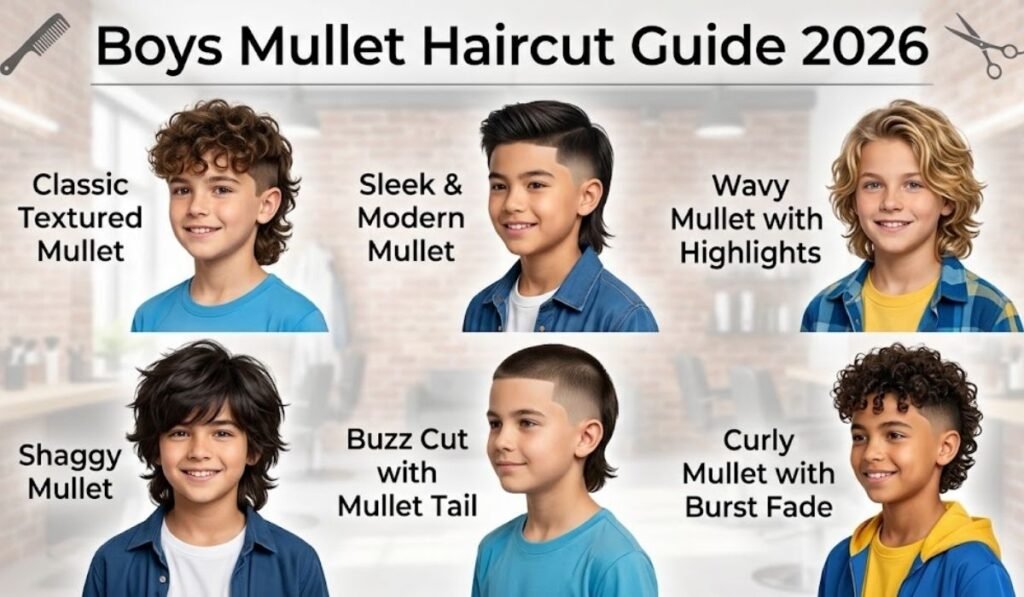
Here are twelve of the most requested takes on the Boys Mullet Haircut for 2026, from the simplest to the boldest.
1) Classic Boys Mullet
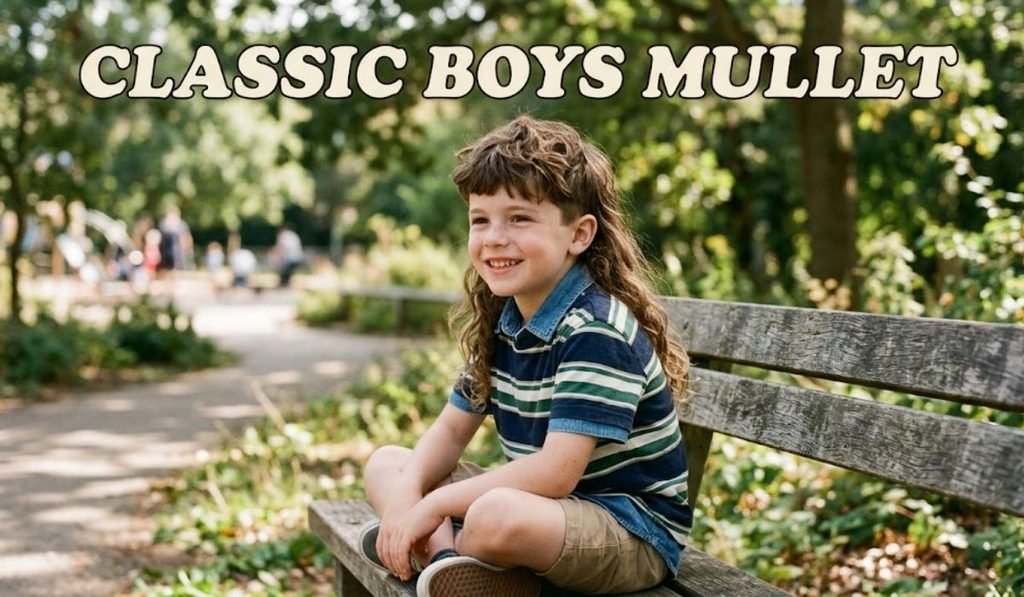
The original blueprint. Short sides, a bit of length on top, and a back that sits just past the collar. It’s the easiest version to describe to a barber and the easiest to trim back down if it grows out awkwardly. A solid pick for boys trying the style for the first time.
2) Boys Mullet Fade
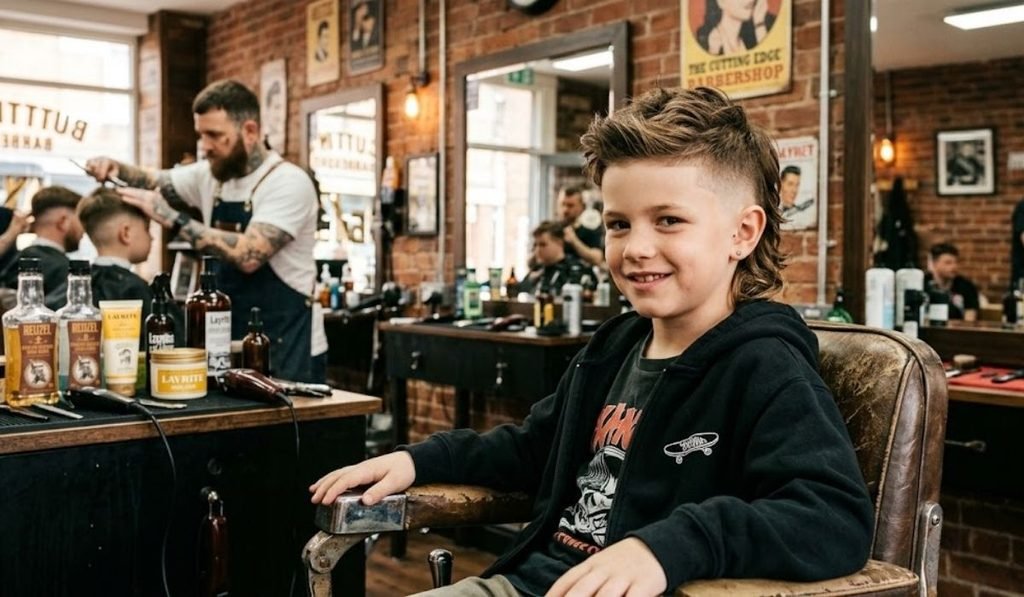
This variation swaps a plain trim for a proper fade on the sides. The fade tapers from very short near the ear and blends upward, creating a sharp, defined edge. It pairs well with almost any top length and gives the whole haircut a cleaner finish.
3) Short Mullet Haircut Boy

For parents who want the mullet shape without much extra length anywhere. The back stays short, the sides stay tight, and the overall look is subtle. This version is popular for younger boys and for schools with stricter grooming rules.
4) Curly Boys Modern Mullet
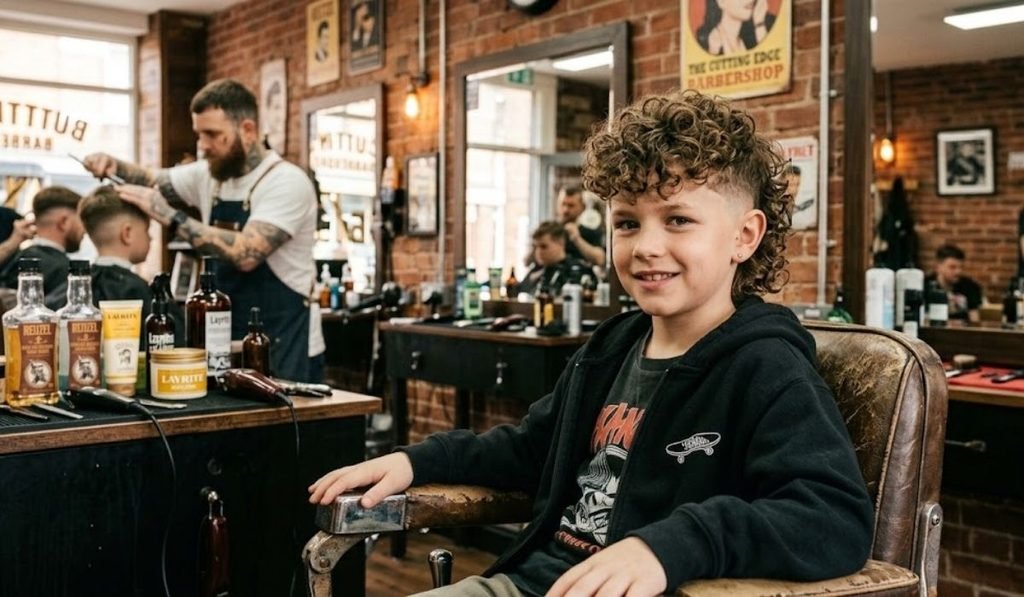
Curls add natural volume on top without any extra effort. Barbers usually keep the sides tapered rather than fully faded here, since curly hair already brings enough texture and contrast. Low maintenance and full of personality.
5) Boys Modern Mullet Straight Hair
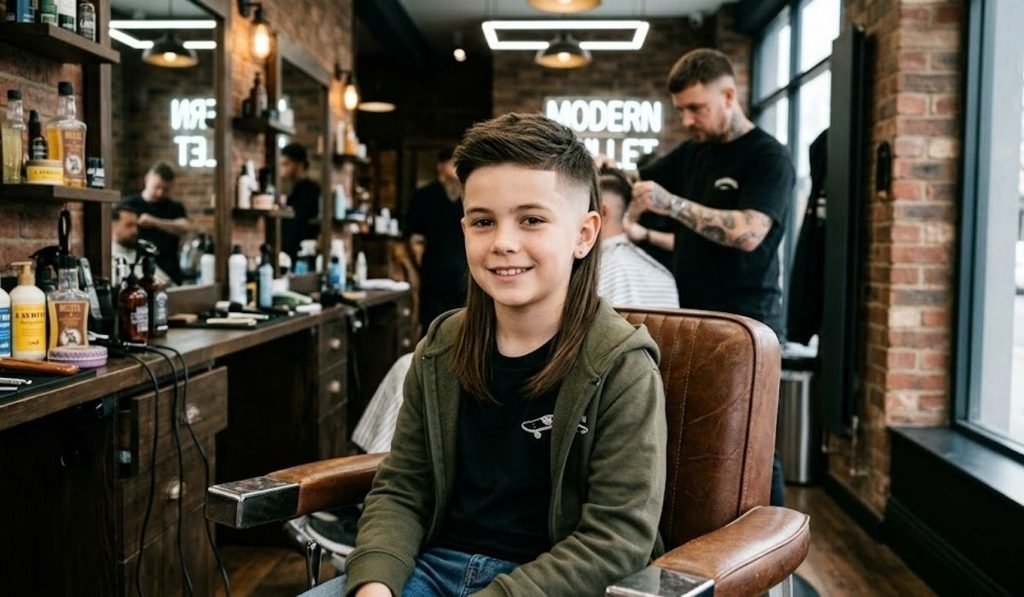
Straight hair holds a crisp line better than any other texture. This makes it ideal for fades and sharp back sections. A light styling cream keeps the top from looking flat while holding the shape through the day.
6) Tapered Modern Mullet Haircut Boy
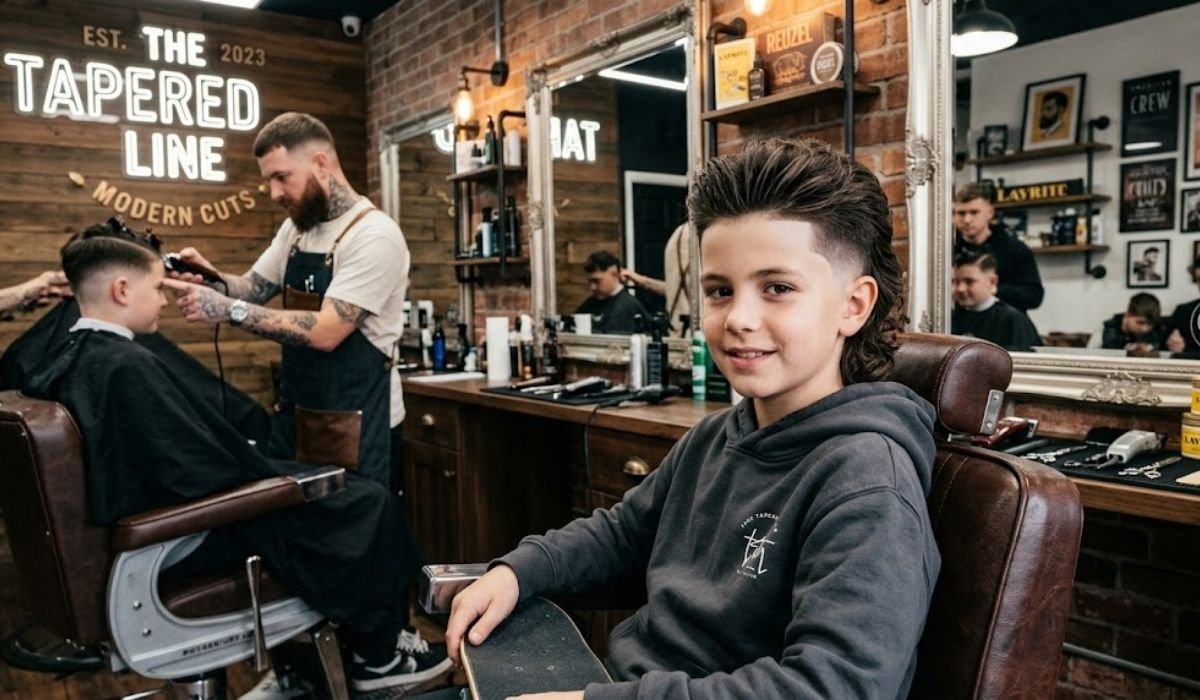
A softer alternative to the fade. Instead of a sharp shaved line, the sides gradually shorten toward the neck. It’s a good middle ground for schools that don’t allow dramatic fades but still want a modern look.
7) Burst Fade Boys Mullet Haircut
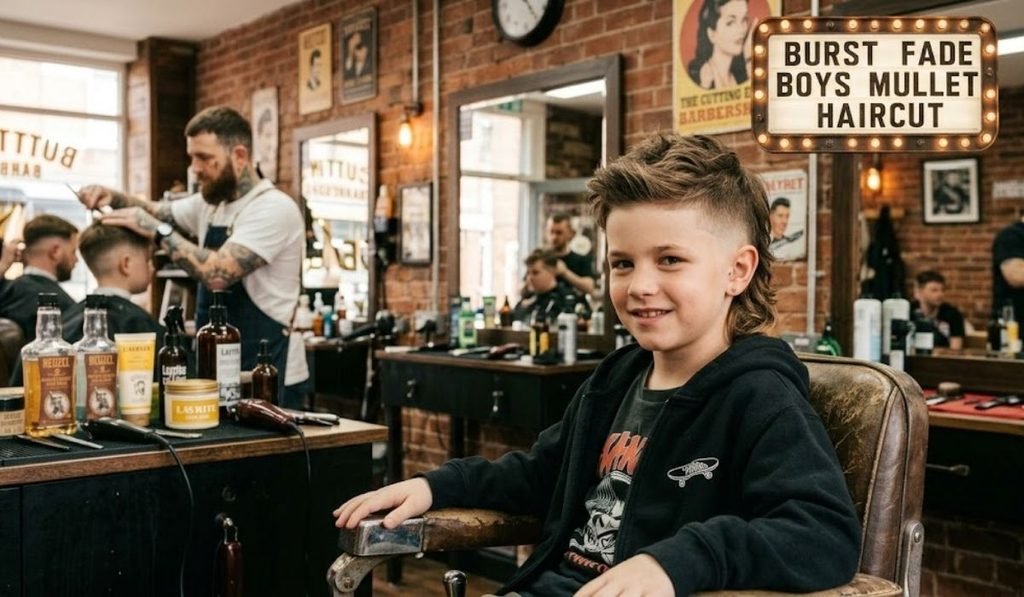
The fade curves around the ear instead of running in a straight line, creating a rounded, sharp look from every angle. This version takes real barber skill, so it’s worth choosing a shop with mullet experience specifically.
8) Sporty Medium Mullet

Built for boys who are constantly moving. The back sits at a medium length that won’t get in the way during sports, while the top is short enough to skip daily styling. Practical and low-fuss.
9) Wavy Surfer Mullet for Boys
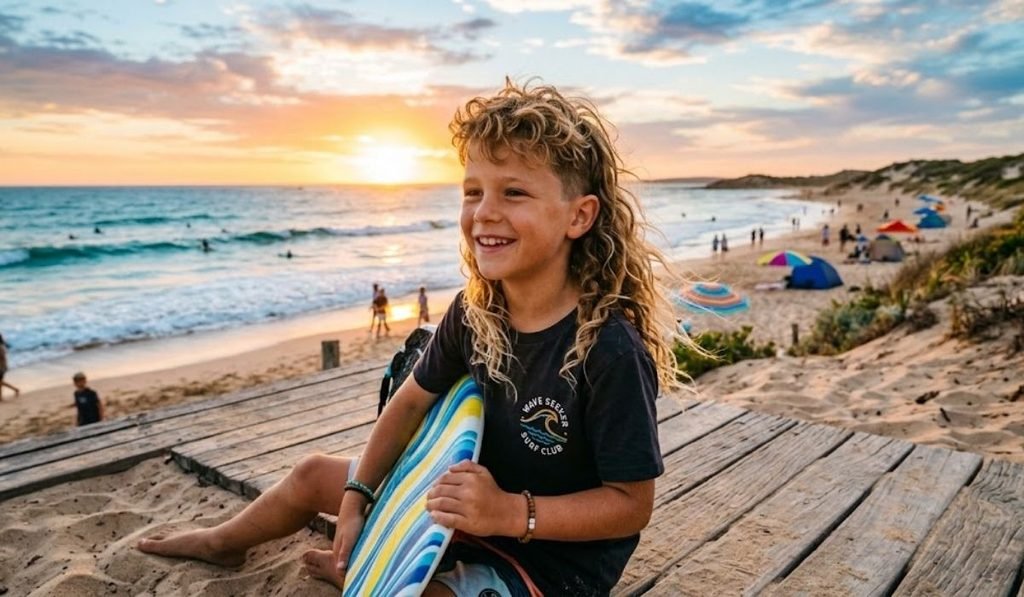
A relaxed, beachy take with a tousled top and soft waves flowing into the back. It looks effortless but usually needs a light sea-salt spray to keep the texture defined.
10) Fringe Mullet
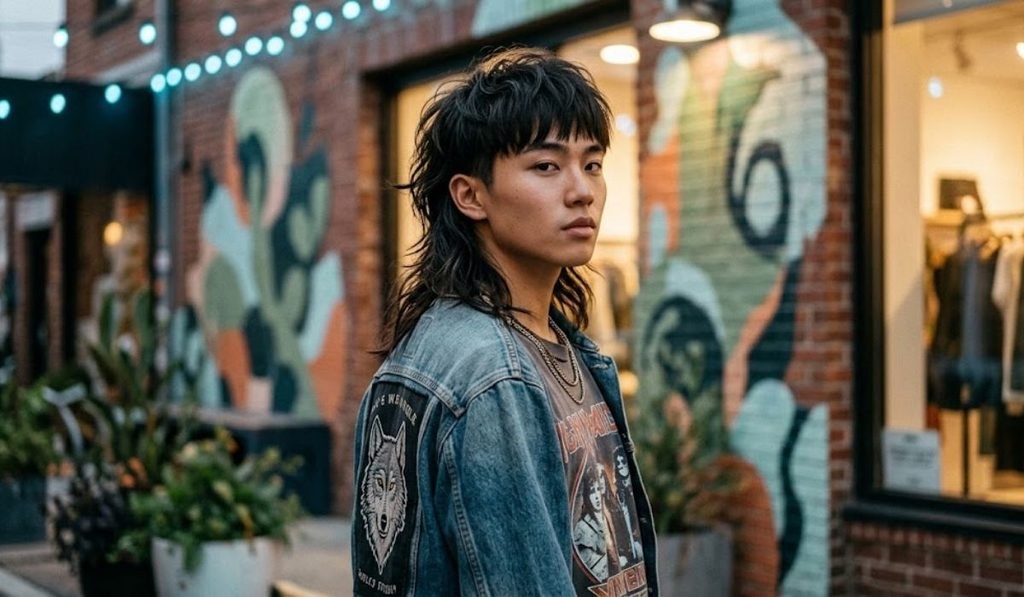
Adds a straight or side-swept fringe at the front, framing the face while the classic mullet shape holds at the back. It’s a stylish option, but the fringe needs a trim every few weeks to stay sharp.
11) Low Fade Modern Mullet
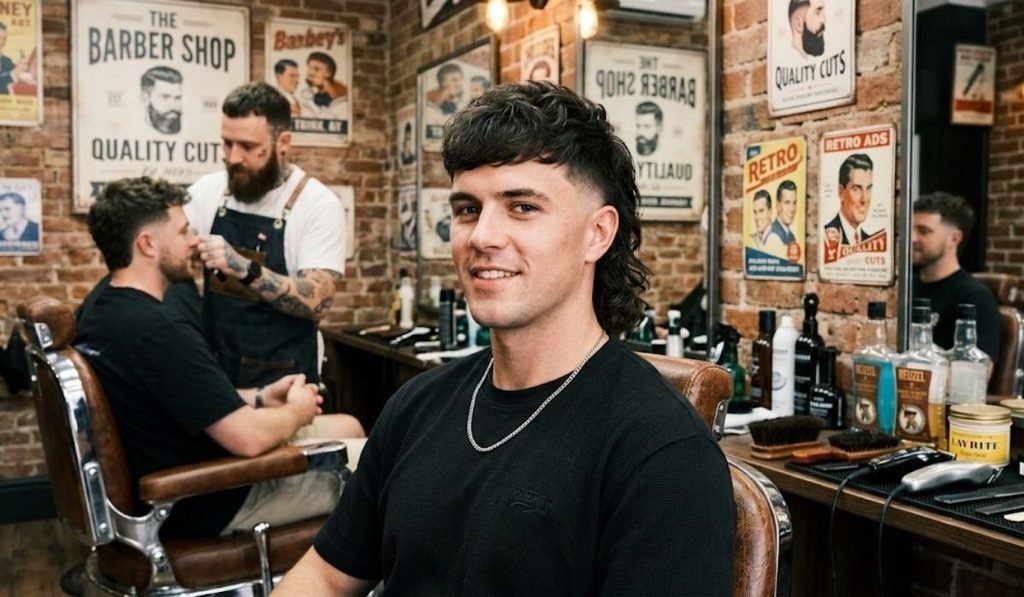
The fade sits lower, usually starting around ear level, which gives a smoother transition than a high fade. It reads as subtle and works well for boys who want definition without an obvious shaved section.
12) Longer Back, School Safe
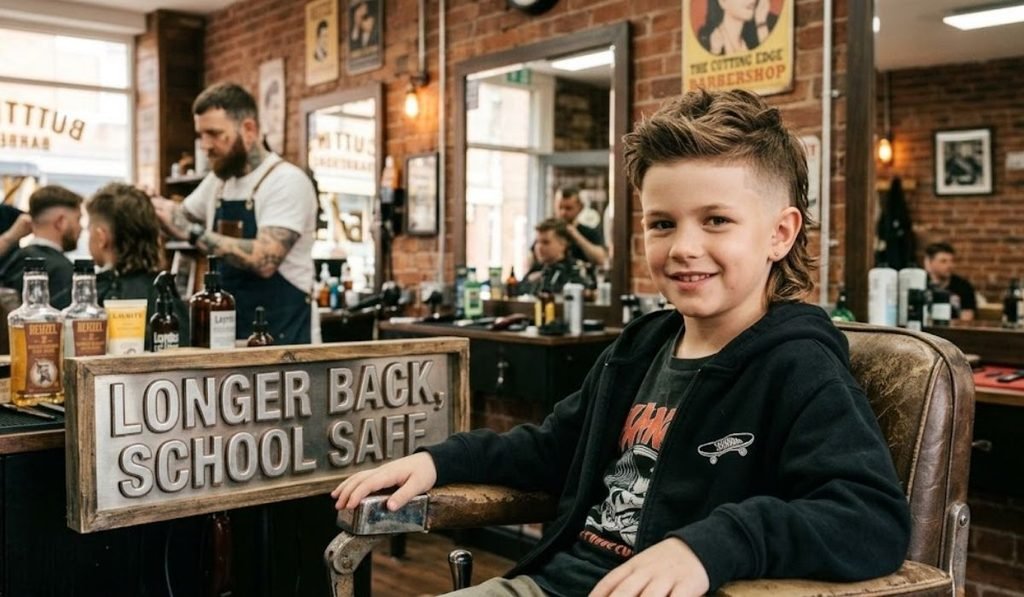
This version keeps the back at a moderate, collar-grazing length while everything else stays conservative — tapered sides, no shaved lines, minimal top length. It’s the safest Boys Mullet Haircut option for schools with strict grooming policies.
Quick Age and Care Guide
Age plays a bigger role in this haircut than most parents expect. A style that looks great on a fourteen-year-old can be a headache to maintain on a six-year-old.
| Age Group | Recommended Style | Maintenance |
| 4–7 years | Short mullet or tapered version | Low |
| 8–11 years | Classic mullet or soft fade | Low to medium |
| 12–15 years | Fade mullet, burst fade, fringe mullet | Medium |
| 16+ years | Any variation, including bold fades | Medium to high |
Younger boys generally do better with shorter, tidier versions since they’re less likely to sit through longer styling sessions. Teens can usually manage more detailed cuts and are more invested in keeping them sharp.
There’s also the question of how the hair grows out between visits. Younger kids’ hair tends to grow faster and finer, which means a fade can look uneven within just two or three weeks. Older boys with thicker, more established hair patterns hold a sharp line longer, which is part of why fades and burst fades are more common in the teen age bracket. If a shorter trim schedule isn’t realistic for your family, lean toward the tapered or classic versions of the Boys Mullet Haircut, since they simply look better as they grow.
Daily Styling That Kids Can Do
The best Boys Mullet Haircut for a family is one a kid can actually manage himself before school. Here’s a simple daily routine that works for most versions:
- Towel-dry the hair until it’s damp, not soaking wet.
- Apply a small amount of product — a light cream for straight hair, a curl-defining cream for curls.
- Finger-comb the top forward or to the side, depending on the style.
- Leave the back alone — it usually falls into place on its own.
- Use a comb only for sharp fades that need a defined part or line.
No blow dryer, no fuss, no ten-minute mirror sessions. That’s the goal.
Care and Upkeep
Keeping a Boys Mullet Haircut looking fresh comes down to a regular trim schedule and the right products.
- Trim every 3–4 weeks for fades and tapers, since these grow out fastest at the lines.
- Trim every 5–6 weeks for the back length, to keep the mullet shape from getting shaggy.
- Wash 2–3 times a week rather than daily, especially for curly or wavy textures, to avoid drying out the hair.
- Use a lightweight product — heavy gels weigh down fine hair and make the top look flat.
- Brush out curls gently with fingers instead of a fine-tooth comb to keep the natural shape.
Skipping trims is the most common mistake. A Boys Mullet Haircut relies on contrast between the short sides and longer back — once the sides grow out, that contrast disappears and the cut starts looking like a plain overgrown haircut instead of a mullet.
A few product basics make a real difference too:
- Matte clay — best for straight or wavy hair that needs hold without shine.
- Curl cream — keeps curly tops defined without weighing them down.
- Sea-salt spray — adds texture for wavy or surfer-style versions.
- Leave-in conditioner — helps prevent dryness from frequent washing, especially for curly hair.
Avoid heavy pomades or gels on younger kids’ hair. They’re harder to wash out, and most boys don’t need that level of hold for a style built around natural texture.
Barber Talk That Works
Walking into a barbershop without the right words can turn a great idea into a disappointing cut. Use this shortlist to explain exactly what you want:
- “Boys mullet haircut with a soft taper on the sides, please.”
- “Keep the top textured, not too long — enough to style with fingers.”
- “Fade it low, starting around ear level, nothing too dramatic.”
- “Leave the back at collar length, don’t cut it to match the sides.”
- “Blend it, no hard line between the top and the fade.”
- “We want something school-appropriate, so nothing shaved.”
Bringing a reference photo helps too. Barbers see dozens of variations of this cut, and a picture removes any guesswork about exactly which Boys Mullet Haircut style you’re after.
FAQ’s
What age is best for a boys mullet haircut? Most barbers recommend starting from around age 5–6, though the style works well at any age with the right length adjustments.
Is a mullet haircut appropriate for school? Yes, especially the tapered or low-fade versions, which keep the look neat and free of dramatic shaved lines.
How often should a boys mullet be trimmed? Every 3–4 weeks for the sides and fade, and every 5–6 weeks for the back length.
Does a mullet work with curly hair? Yes, curly hair actually adds natural volume and texture to the top without extra styling effort.
What’s the difference between a mullet and a mullet fade? A classic mullet uses a simple trim on the sides, while a mullet fade adds a tapered, blended fade for sharper contrast.
Is a burst fade mullet high maintenance? Yes, it requires more skill to cut and slightly more frequent trims to keep the rounded fade line clean.
Can fine hair handle a mullet haircut? Yes, but shorter layers on top work best, since too much length can make fine hair look flat.
Conclusion
The Boys Mullet Haircut has earned its spot as one of the standout kids’ styles heading into 2026, and it’s easy to see why. It’s flexible enough to suit straight, wavy, or curly hair, practical enough for school, and bold enough to feel like a real style choice rather than just another trim. Whether you go with the classic version, a sharp fade, or a softer school-safe cut, the key is matching the style to your son’s hair type, age, and daily routine. Get that match right, and this haircut will keep looking good trim after trim well into the new year.

I’m Joyce
I’m an SEO-focused writer and content creator with experience in creating useful, search-friendly content that helps readers find the information they are looking for. I enjoy researching trends, understanding what people search for, and turning that research into clear and helpful articles.
At Curl Slayers, I focus on haircuts, hairstyles, fades, and curly hair. I research modern hair trends, different haircut styles, and practical styling ideas to help readers discover fresh looks and choose styles that suit them.
My goal is simple: to make hair inspiration easier to find, understand, and use. Whether you’re looking for a new haircut, a clean fade, a trendy hairstyle, or ideas for your curls, Curl Slayers is here to help you find your next look.

1 thought on “Boys Mullet Haircut Guide 2026: Styles, Fades, and Care”