
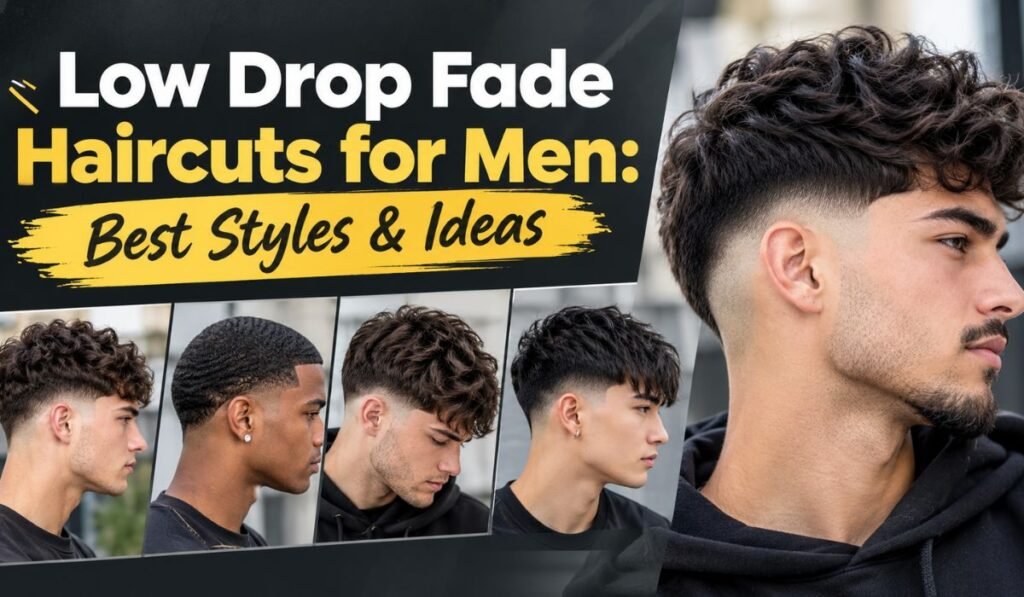
If you’ve been scrolling through barbershop inspiration lately, chances are you’ve seen the low drop fade everywhere. It’s one of the most requested men’s haircuts right now, and for good reason — it’s sharp, versatile, and works with almost any hair type or face shape. This guide breaks down everything you need to know about the low drop fade, from what makes it different to how to ask your barber for one.
What Is a Low Drop Fade?
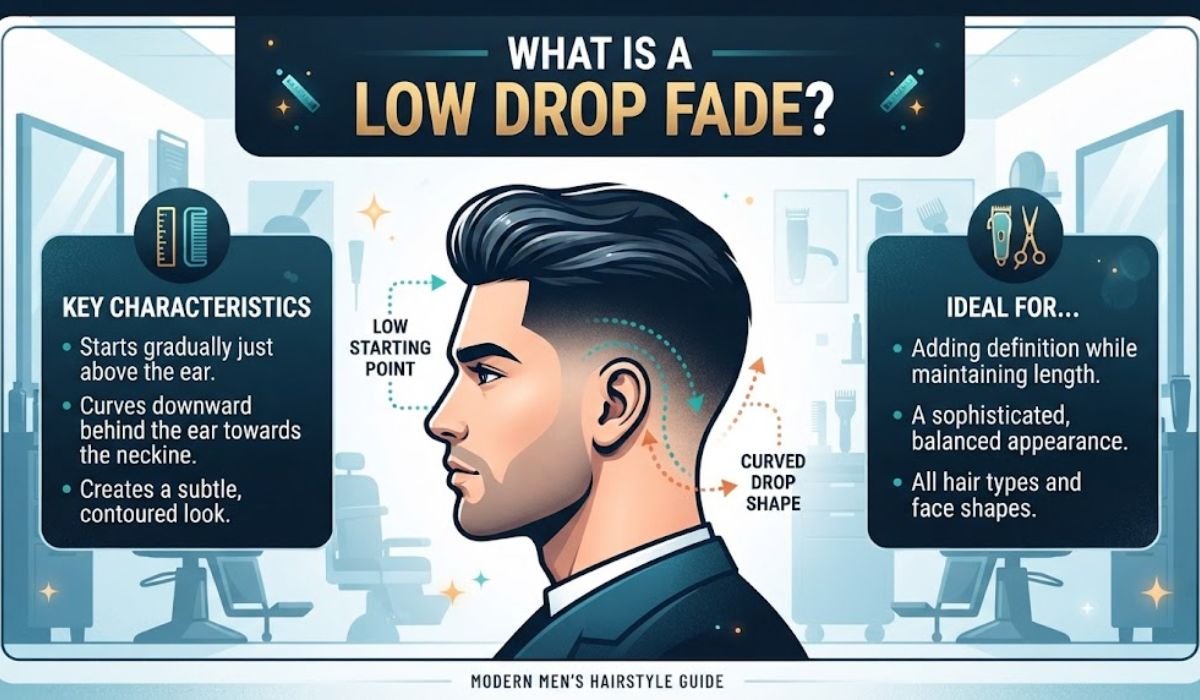
A low drop fade is a type of fade haircut where the fade starts low on the head — just above the ears — and curves, or “drops,” downward behind the ear as it moves toward the nape of the neck. Instead of following a straight horizontal line around the head like a standard fade, the low drop fade follows the natural curve of your skull.
This subtle curve is what separates it from other fades. It creates a rounder, more sculpted look at the back of the head while keeping the sides clean and low-maintenance.
How Does a Low Drop Fade Look?
Visually, a low drop fade looks like this:
- The fade begins low, close to the ear level, not high on the sides.
- It dips or “drops” behind the ear rather than staying straight.
- Hair gradually shortens toward the skin or a short guard length at the bottom.
- The top stays longer, giving contrast between the faded sides and the top style.
The result is a rounded, contoured silhouette that hugs the shape of the head instead of cutting a flat, straight line.
Why Is It Called a Drop Fade?
It’s called a drop fade because the fade line literally “drops” lower as it curves around and behind the ear. Instead of a fade that sits at one consistent height all the way around, the line dips down, following the head’s natural shape. When this technique is done low on the head, it becomes a low drop fade.
Best Low Drop Fade Haircuts and Styles
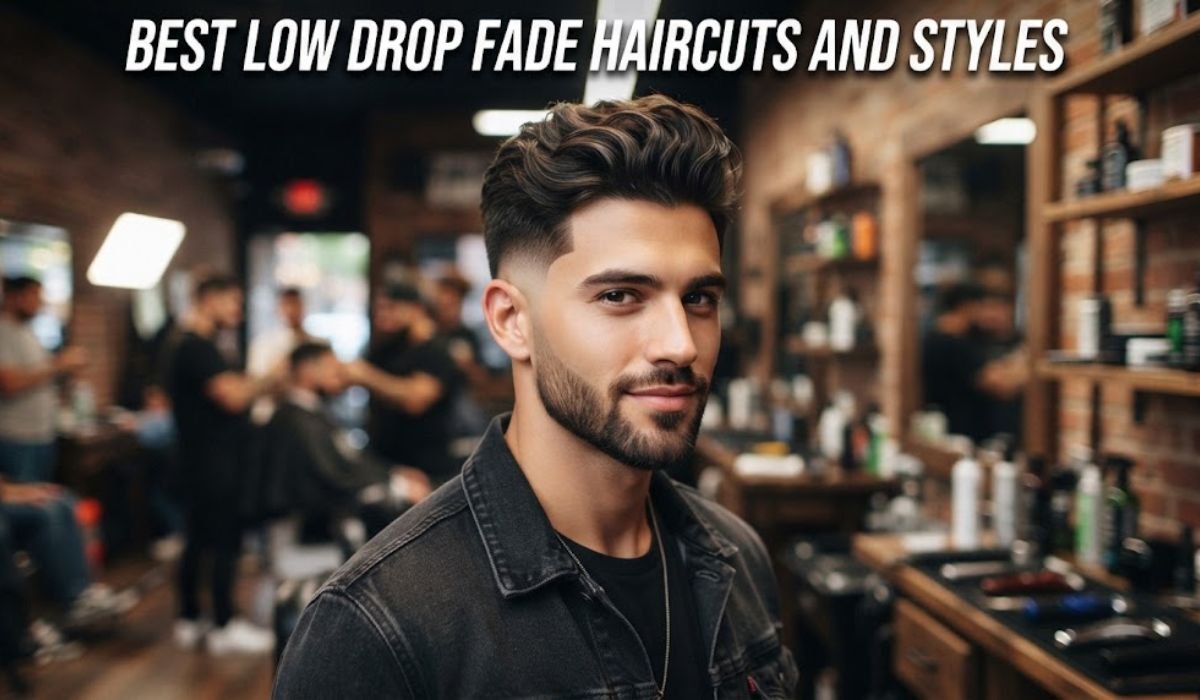
The beauty of the low drop fade is how many ways it can be styled on top. Here are the most popular variations barbers are doing right now.
Low Drop Fade with Curly Hair
Curly hair pairs naturally with a low drop fade because the fade emphasizes the curl pattern on top instead of competing with it. The tight sides let the curls breathe and bounce freely, creating a defined, textured contrast.
Low Drop Fade with Straight Hair
For straight hair, the low drop fade creates a crisp, clean look. The straight top can be styled forward, swept to the side, or left naturally textured, while the faded sides add sharp definition.
Low Drop Fade with Wavy Hair
Wavy hair and the low drop fade are a classic combination. The waves on top get more visual pop when the sides are faded low and tight, and a little product helps define each wave pattern.
Low Drop Fade with Textured Fringe
A textured fringe adds movement to the front of the hairstyle. Paired with a low drop fade, it creates a modern, slightly messy look that still feels put-together.
Low Drop Fade with Bulk
This version keeps more length and volume on top instead of a tight crop. The extra bulk contrasts strongly with the faded sides, making the low drop fade look bolder and more voluminous.
Low Drop Fade V Shape
Here, the neckline is cut into a “V” shape at the back instead of a rounded or straight line. It’s a distinctive detail that pairs well with a low drop fade for guys who want something a bit different at the nape.
Low Drop Fade Buzz Cut
For a low-maintenance option, the top is buzzed short and blended straight into the low drop fade. It’s clean, simple, and requires almost no daily styling.
Low Drop Fade for Black Men
This style works exceptionally well for coily and afro-textured hair. The low drop fade creates a rounded frame that highlights natural curl patterns, twists, or a short afro on top.
Low Drop Fade with Beard
Pairing a low drop fade with a well-groomed beard creates a balanced, masculine look. The fade keeps the sides sharp while the beard adds structure to the jawline.
Low Drop Fade Blowout
A blowout on top means extra height and volume, often achieved with a blow dryer and round brush. Combined with a low drop fade, it creates a striking contrast between the tight sides and the voluminous top.
Read Related Post: Textured Fringe Mid Taper Haircut Ideas Every Man Should Try
Low Drop Fade for Different Hair Types
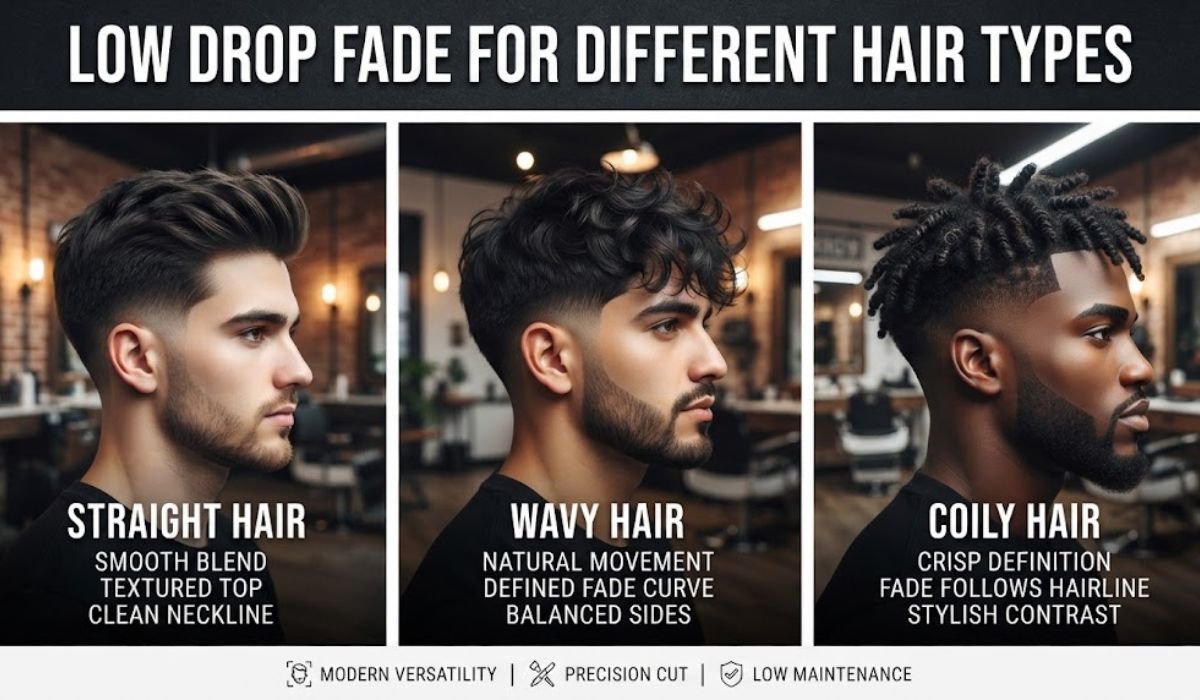
Not every hair type wears a low drop fade the same way. Here’s a quick breakdown:
| Hair Type | How the Low Drop Fade Works |
| Straight Hair | Creates sharp, clean lines; easy to style flat or textured |
| Curly Hair | Highlights curl pattern; sides stay neat while curls stay full |
| Wavy Hair | Adds contrast that makes waves stand out more |
| Thick Hair | Reduces bulk on the sides while keeping volume on top |
| Fine Hair | Adds the appearance of density and texture |
| Coily and Afro Hair | Frames natural texture and works well with twists or afros |
Straight Hair
Straight hair holds a crisp fade line well and is easy to style in almost any direction.
Curly Hair
Curls get more definition when sides are faded low, letting the top texture shine.
Wavy Hair
Waves look more dynamic against the tight, faded sides of a low drop fade.
Thick Hair
A low drop fade removes bulk from the sides, making thick hair easier to manage.
Fine Hair
The contrast created by the fade makes fine hair appear thicker and fuller.
Coily and Afro Hair
This texture pairs beautifully with the rounded shape of a low drop fade, especially with a short afro or twists on top.
Low Drop Fade Haircuts by Top Style
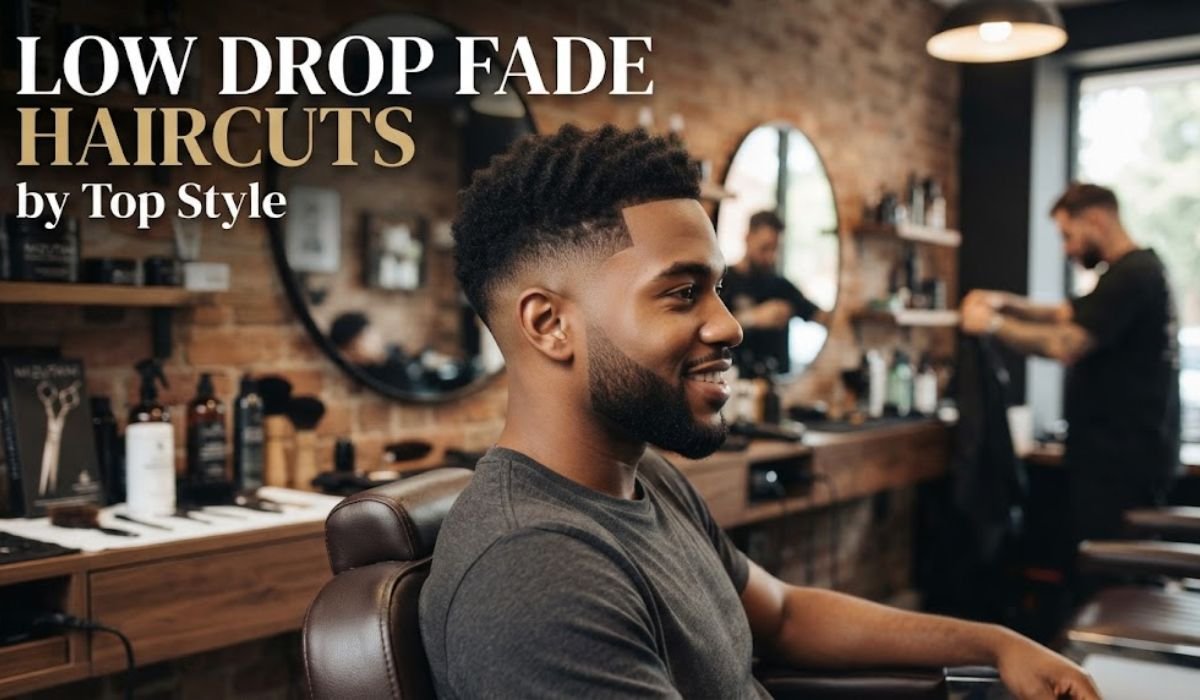
Low Drop Fade with a Crop
A textured crop on top keeps things short, neat, and low-maintenance while the low drop fade does the heavy lifting on the sides.
Low Drop Fade with a Side Part
A defined side part adds a polished, classic touch — perfect for office or formal settings.
Low Drop Fade with Slick Back
Slicked-back hair paired with a low drop fade gives an elegant, refined finish that works for both casual and dressy occasions.
Low Drop Fade with a Man Bun
Longer hair pulled into a bun still benefits from a low drop fade underneath, keeping the sides tidy while the top stays long.
Low Drop Fade with Dreads
Dreadlocks look sharp when the sides are cleanly faded, creating a strong contrast between the loose locks and the tight, low fade.
Low Drop Fade with Waves
For guys chasing “360 waves,” a low drop fade keeps the sides sharp so the wave pattern on top stands out even more.
Low Drop Fade with Mohawk
A bold choice — the mohawk strip on top contrasts dramatically with the rounded, low fade on the sides.
Low Drop Fade vs Low Fade vs Low Taper
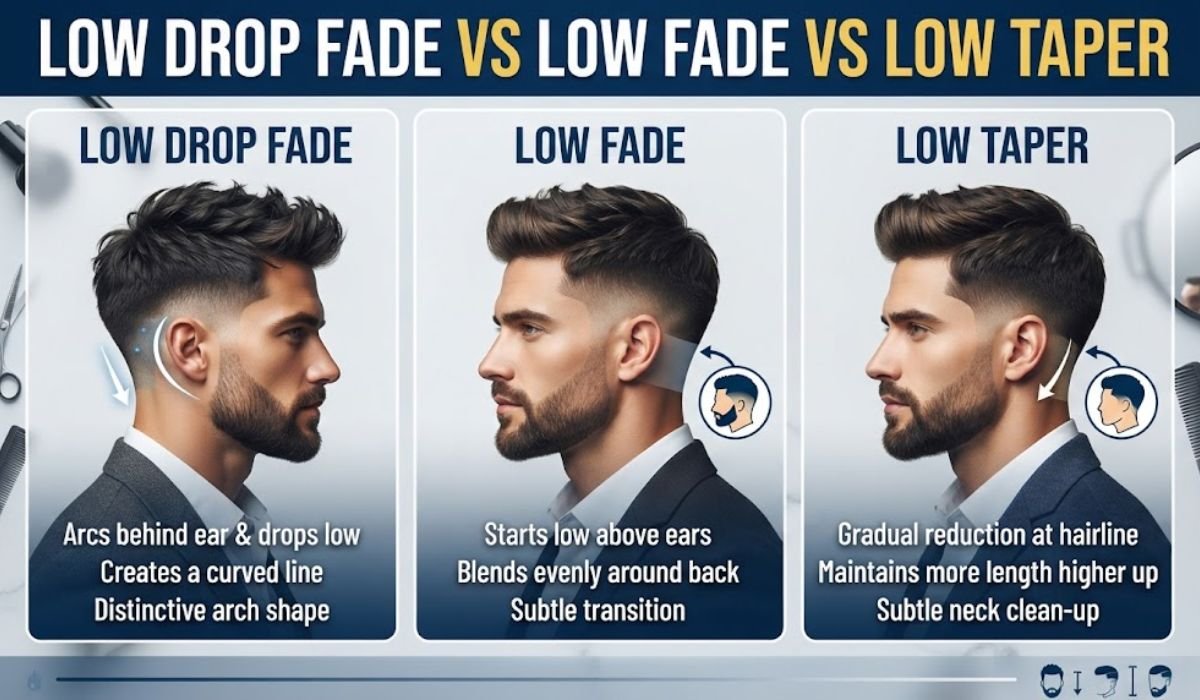
These three terms get mixed up often, so here’s a clear comparison.
| Style | Key Feature | Best For |
| Low Drop Fade | Fade curves/drops behind the ear | Guys wanting a contoured, rounded look |
| Low Fade | Fade stays at a consistent low height, no curve | Guys wanting a simple, subtle fade |
| Low Taper | Very gradual fade, longer length kept overall | Guys wanting minimal contrast |
Low Drop Fade vs Low Fade
A regular low fade keeps a straight fade line around the head. A low drop fade curves that line downward behind the ear for a more sculpted effect.
Low Drop Fade vs Low Taper
A low taper fades more gradually and keeps more overall length, while a low drop fade has a more distinct, curved transition.
Low Drop Fade vs Mid Drop Fade
The difference comes down to starting height. A low drop fade starts near the ear, while a mid drop fade starts higher, around the temple area.
How to Choose the Right Low Drop Fade
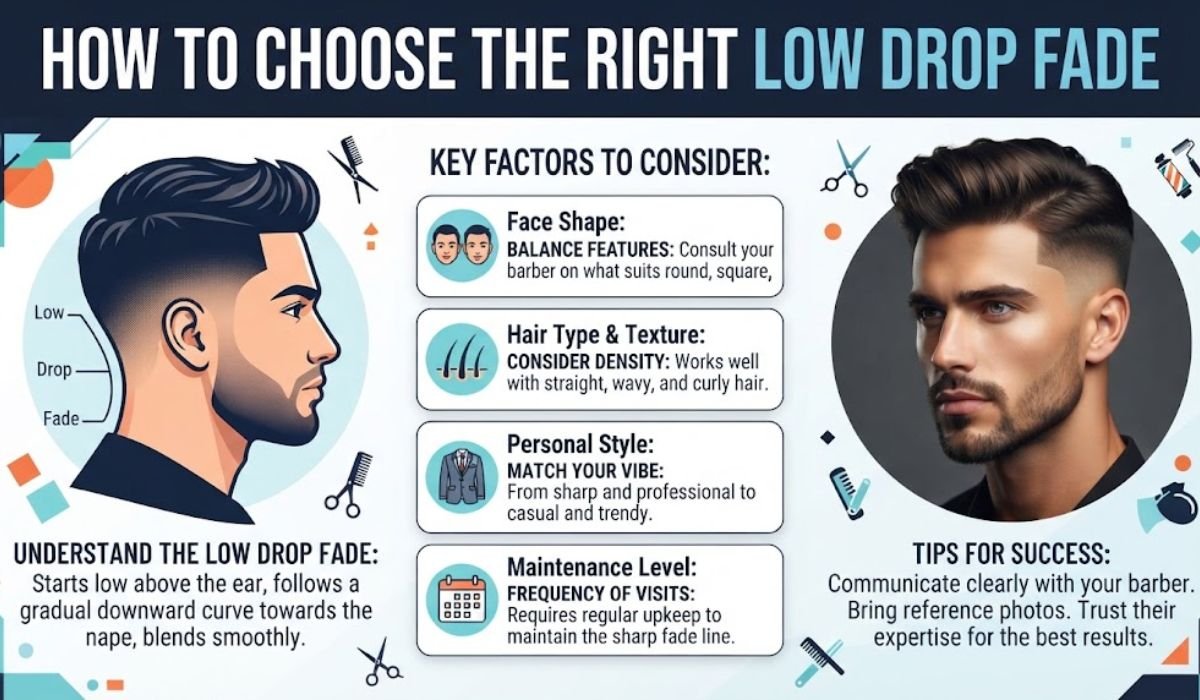
Choose the Fade Height
Since it’s already low, focus on how close to the ear you want the fade to begin — closer to the ear gives a subtler transition.
Choose Skin, Shadow, or Guard Length
- Skin fade: fades all the way down to bare skin
- Shadow fade: leaves a light shadow of hair instead of bare skin
- Guard length: leaves a short, uniform length instead of fading to skin
Choose the Right Top Length
Shorter tops (crops, buzz cuts) create a subtle look, while longer tops (blowouts, curls, waves) create bold contrast with the low drop fade.
Consider Your Face Shape
- Round faces: pair well with more height on top
- Square faces: work with almost any top length
- Oval faces: extremely versatile with a low drop fade
- Long faces: benefit from added width or fringe on top
How to Ask Your Barber for a Low Drop Fade
What to Tell Your Barber
Be specific. Say you want a low drop fade that starts near the ear and curves behind it, and specify whether you want a skin fade, shadow fade, or guard length at the bottom.
Show a Reference Photo
Barbers work best with visuals. Bring a clear photo showing the fade height, the curve behind the ear, and your desired top length.
How to Style a Low Drop Fade
Start With Clean Hair
Wash and dry hair fully before styling — product applies more evenly on clean hair.
Use the Right Product
- Matte clay or paste for texture
- Pomade for shine and slick styles
- Sea salt spray for natural wave or curl definition
Blow-Dry for Shape
Use a blow dryer with a brush to add volume or direction to the top, especially for blowout or textured styles.
How to Maintain a Low Drop Fade
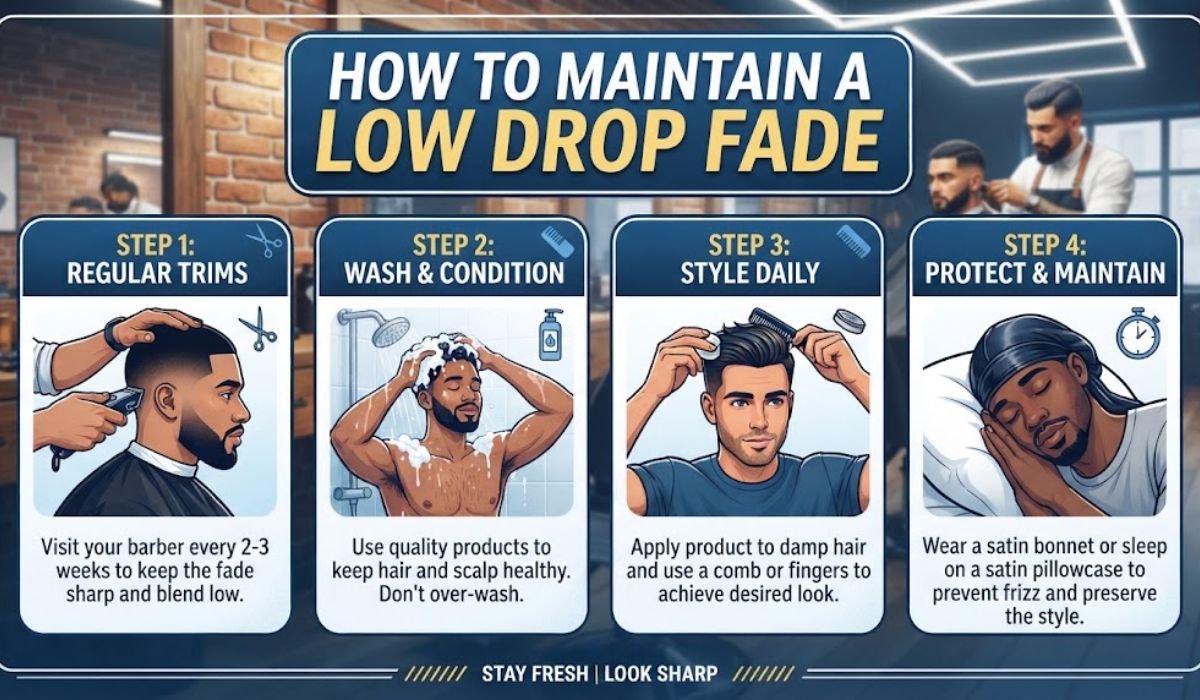
How Often Should You Get a Low Drop Fade?
Most guys need a touch-up every 2–3 weeks to keep the fade line sharp, since fades grow out faster than other haircuts.
Maintain the Top Between Barber Visits
Regular trims every 4–6 weeks help keep the top length consistent between full fade appointments.
Keep the Neckline and Sideburns Clean
A quick trim of the neckline and sideburns between visits keeps the entire low drop fade looking fresh.
Low Drop Fade vs Other Fade Styles
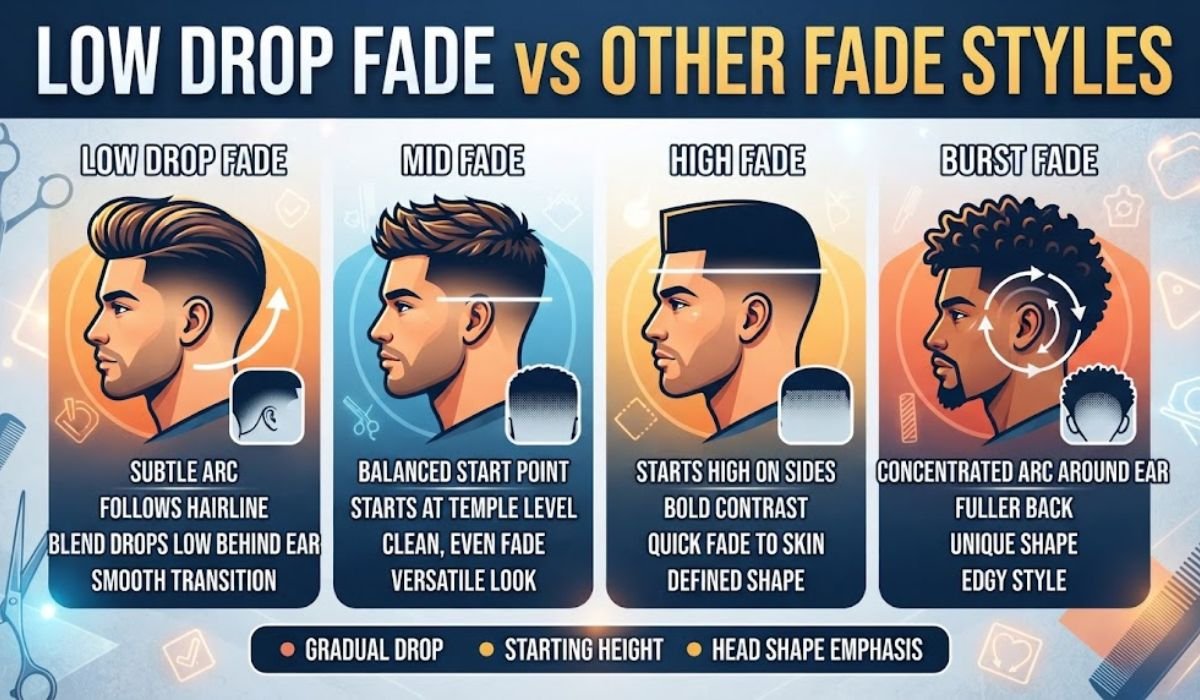
Low Drop Fade vs Shadow Fade
A shadow fade leaves a soft shadow instead of bare skin, while a low drop fade refers to where and how the fade curves, and can be combined with a shadow finish.
Low Drop Fade vs Skin Fade
A skin fade fades all the way to bare skin. A low drop fade can be cut as a skin fade, but it doesn’t have to be — it can also end in a shadow or short guard length.
Low Drop Fade vs Taper Fade
A taper fade is more gradual with less contrast overall, while a low drop fade creates a sharper, more defined transition with its signature curve.
Final Thoughts on Low Drop Fade
The low drop fade stands out because it works with nearly every hair type, face shape, and top style. Whether you want something low-key like a buzz cut or something bold like a blowout or mohawk, this haircut adapts to your personal style while keeping a clean, contoured finish. With regular maintenance and the right barber, a low drop fade can be one of the easiest, most flattering haircuts you’ll ever get.
FAQ’s
Is a low drop fade good for round faces?
Yes, especially when paired with more height or volume on top to elongate the face.
How long does a low drop fade take to grow out?
Most guys start noticing growth after 2–3 weeks, requiring a touch-up.
Can I get a low drop fade with long hair on top?
Yes, it pairs well with long tops like man buns, blowouts, or curly styles.
Does a low drop fade work for all hair textures?
Yes, it adapts to straight, wavy, curly, and coily hair types.
Is a low drop fade the same as a skin fade?
Not exactly — a skin fade refers to the ending (bare skin), while a low drop fade refers to the fade’s shape and starting height.
How do I ask for a low drop fade at the barbershop?
Ask for a fade that starts near the ear and curves behind it, and specify your preferred top length and fade finish (skin, shadow, or guard).

I’m Joyce
I’m an SEO-focused writer and content creator with experience in creating useful, search-friendly content that helps readers find the information they are looking for. I enjoy researching trends, understanding what people search for, and turning that research into clear and helpful articles.
At Curl Slayers, I focus on haircuts, hairstyles, fades, and curly hair. I research modern hair trends, different haircut styles, and practical styling ideas to help readers discover fresh looks and choose styles that suit them.
My goal is simple: to make hair inspiration easier to find, understand, and use. Whether you’re looking for a new haircut, a clean fade, a trendy hairstyle, or ideas for your curls, Curl Slayers is here to help you find your next look.
