
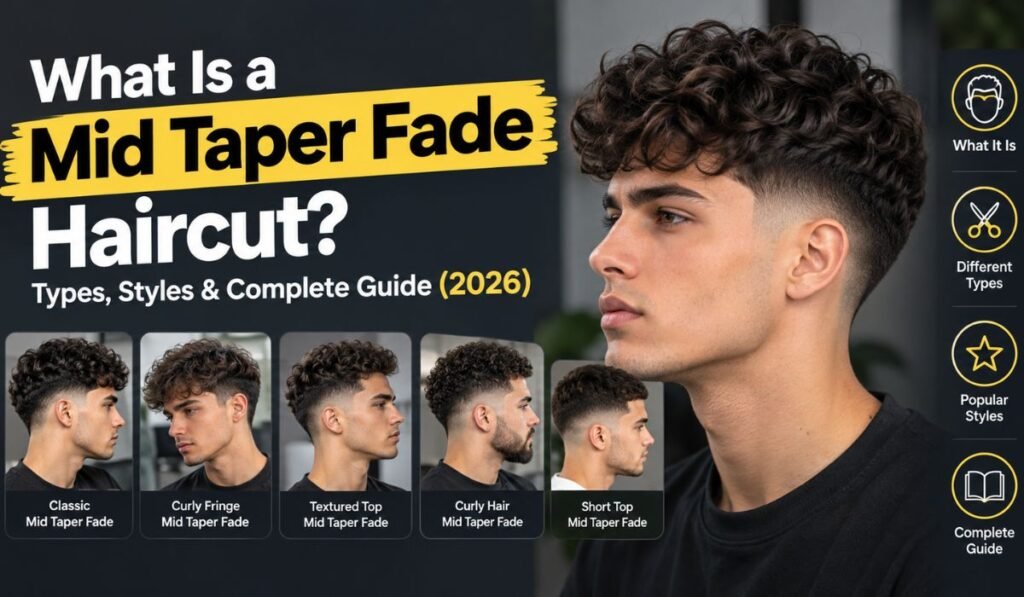
If you want a haircut that looks sharp without trying too hard, the mid taper fade deserves a spot on your list. It sits in the sweet spot between a barely-there low fade and a bold, high-contrast skin fade, which is exactly why barbershops keep hearing the same request in 2026.
This guide covers what the cut actually is, its most popular variations, how it stacks up against a low taper fade, what to expect at the barbershop, and how to manage it yourself at home. Barbers with years of hands-on experience consistently point to this style as one of the most requested cuts of the year, thanks to how easily it adapts to different hair types, face shapes, and lifestyles.
What Is a Mid Taper Fade?
A mid taper fade is a men’s haircut where the hair on the sides and back starts shortening at the midpoint between the temple and the ear, then blends gradually down toward the hairline and neckline.
The word “mid” refers to the starting point of the fade on the head — roughly 1 to 2 inches above the ear. From there, your barber blends the length shorter as it travels down, rather than jumping straight to skin.
Here’s what separates it from other tapers:
- Starting point: Begins at the midpoint of the head, not high near the crown and not low near the ears.
- Blend style: Gradual, smooth transition rather than a sharp line.
- Versatility: Works with almost any top style — textured crop, slick back, curls, or an afro.
- Maintenance: More forgiving than a high fade but needs more upkeep than a low fade.
This cut isn’t a full skin fade by default, though many men ask for a bit of skin exposure near the bottom for extra definition. It’s more of a foundation you build a style on top of, rather than a complete look on its own.
Mid Taper Fade Types
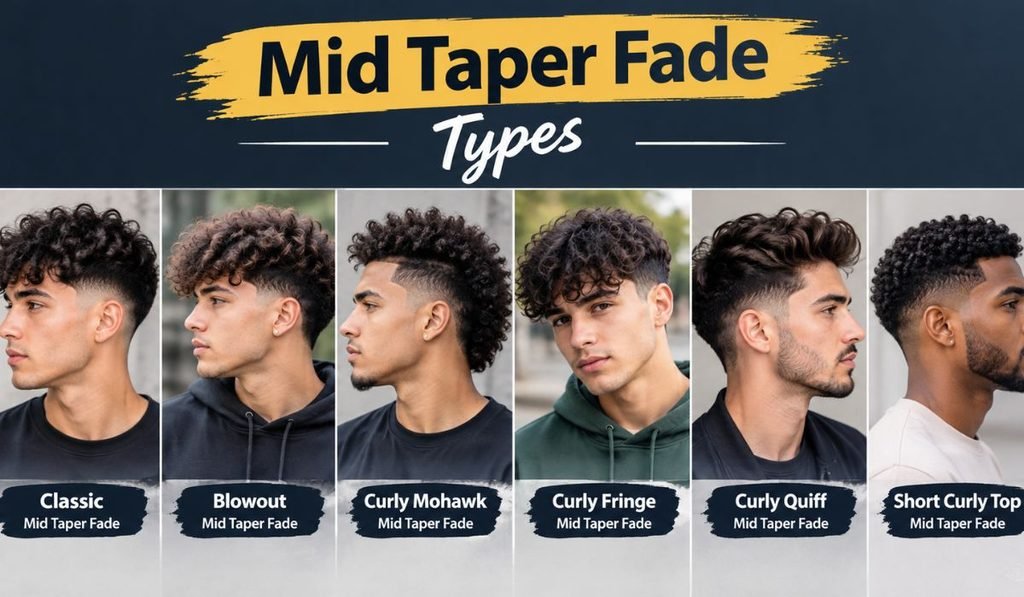
This haircut works across nearly every hair type and texture, which is part of why it’s so widely requested. Below are the most popular variations.
Classic Mid Taper Fade
This is the standard version — short, textured hair on top paired with a clean taper on the sides that starts at the midpoint. It’s low-maintenance, looks presentable straight out of the shower, and works with almost any face shape. If you want one dependable haircut, this is it.
Mid Taper Fade with Beard
Pairing this cut with a well-groomed beard creates a sharp, masculine frame for the face. The fade keeps the sides tight while the beard line is cleaned up to match, giving the whole look a polished, connected finish. This combo is especially popular for professional settings.
Mid Taper Fade Curly Hair
Curly hair holds volume beautifully with this style because the tapered sides stay controlled while the curls on top get room to bounce and define themselves naturally. A light curl cream or definer keeps the pattern crisp without weighing it down.
Read Related Post: 19 Cool Low Taper Fade Mullet Haircuts for Men That Are Trending (2026)
Mid Taper Fade with Waves
For men chasing that rippled “360 waves” texture, this taper keeps the sides neat while the waves on top do the talking. Regular brushing, a durag at night, and a light wave pomade help the pattern stay sharp between visits.
Mid Taper Fade Low Cut
This variation keeps the top shorter overall, closer to a buzz cut, while still tapering at the mid-point on the sides. It’s the lowest-maintenance version of the cut and ideal for guys who want something clean, simple, and quick to style — or not style at all.
Mid Taper Fade Afro
An afro on top paired with a tapered fade on the sides creates striking contrast between volume and precision. The fade keeps the shape controlled while the afro is free to grow and be picked out for fullness.
Mid Taper Fade Haircut Black Men
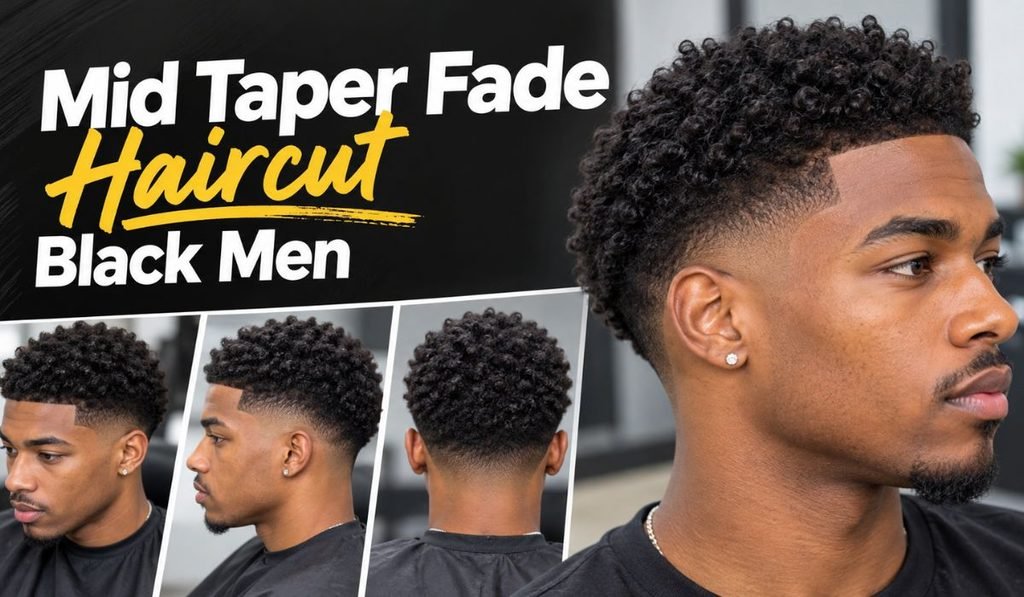
For black men, this haircut is often combined with textured tops, waves, twists, or a low afro. Barbers experienced with coarser hair textures typically start with a slightly higher guard and work down gradually to avoid uneven patches, since coarse hair needs more precision during blending.
| Type | Best For | Maintenance Level |
| Classic | Everyday, versatile looks | Low |
| With Beard | Professional, polished styles | Medium |
| Curly Hair | Natural curl patterns | Medium |
| With Waves | 360 wave enthusiasts | Medium-High |
| Low Cut | Minimal styling time | Low |
| Afro | Volume and texture lovers | Medium |
| Black Men | Coarse or textured hair | Medium |
Mid Taper Fade vs Low Taper Fade
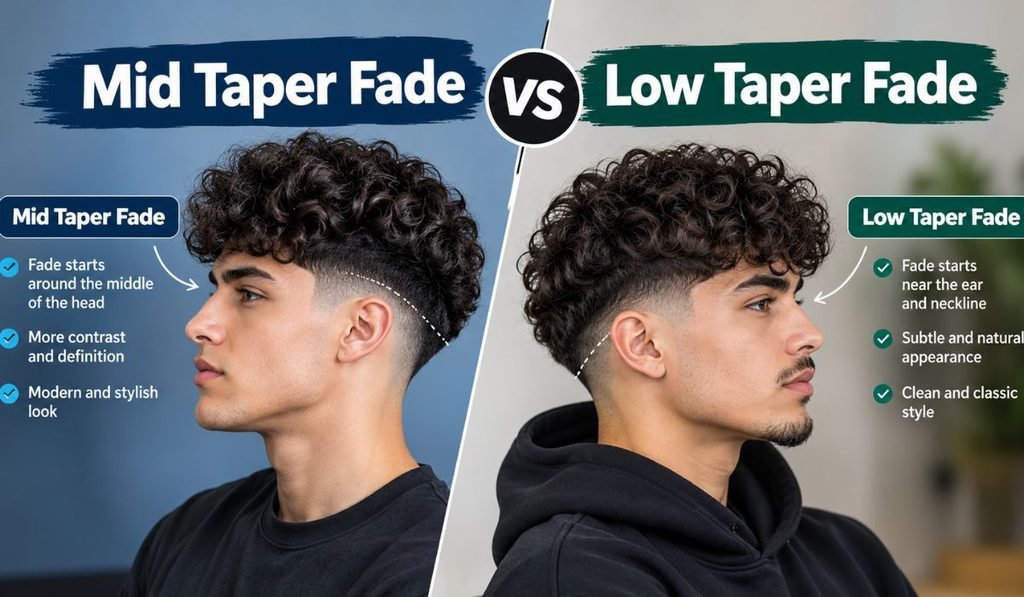
Both cuts are subtle compared to a high fade, but they aren’t the same thing, and mixing them up at the barbershop is a common mistake.
Key Differences
- Starting point: This fade begins at the midpoint of the head, roughly level with the temple. A low taper fade starts much closer to the ears and neckline.
- Contrast level: The mid taper creates more visible contrast between the top and sides. The low taper stays conservative and blends in quietly.
- Face-framing effect: This cut adds shape and definition around the head. A low taper keeps a softer, more natural silhouette.
- Growth-out period: Mid tapers tend to hold their shape a bit longer before needing a refresh, since the fade isn’t concentrated in one small area.
| Feature | Mid Taper | Low Taper |
| Fade start point | Midpoint between temple and ear | Near the ears/neckline |
| Contrast | Moderate to noticeable | Subtle, understated |
| Best for | Guys who want definition | Guys who want a natural look |
| Formality | Works for casual and professional | Best for conservative, formal settings |
| Touch-up frequency | Every 2-3 weeks | Every 3-4 weeks |
Which Suits Which Face Shape
- Round faces: This taper removes bulk from the sides, making the face look longer and more angular. Pairing it with slightly more length on top adds even more height and balance.
- Square faces: The moderate contrast of a mid taper complements a strong jawline nicely.
- Oval faces: Works with nearly any fade height, including mid — keep the top at medium length for balance.
- Oblong/rectangular faces: A low taper fade or a lower mid taper reads better here, since a full mid taper can over-elongate the face.
- Diamond faces: A mid-height taper softens narrow cheekbones while keeping the sides tidy, especially when paired with a bit more volume on top.
Mid Taper Fade Lifestyle
This haircut fits into almost any lifestyle because it doesn’t demand constant attention. It looks sharp for the office, holds up during workouts, and still looks intentional on weekends without extra styling.
- Active guys: The tapered sides stay neat even after a sweaty gym session or a swim.
- Professionals: Paired with a beard or a slicked top, it reads as polished and put-together.
- Low-maintenance types: The low-cut or classic version needs almost no daily styling.
- Style experimenters: Curly, wavy, or afro tops let you change the look on top while keeping the same reliable fade underneath.
Because the fade sits at the midpoint rather than high on the head, it also grows out more evenly, so you’re not stuck with an awkward, patchy look between barber visits. This makes it a practical choice for anyone who travels often or can’t always make it to the barbershop on schedule.
How to Get a Mid Taper Fade at a Barber Shop
Walking in and simply asking for this cut is a fine starting point, but getting specific gets you a far better result.
What Should You Ask
Bring reference photos — front, side, and back — and be precise about details:
- Ask for the fade to “start at the mid-point, about an inch and a half above the ear.”
- Specify whether you want skin exposure at the bottom or just a tapered blend.
- Mention your preferred neckline shape (rounded or squared).
- Tell your barber how much length to leave on top.
- If you have curly, wavy, or coarse hair, mention it upfront so the barber adjusts their clipper guard and technique.
Clear communication is the difference between walking out with exactly what you pictured and walking out with a low or high taper by mistake.
Time and Cost for a Mid Taper
This haircut typically takes 30 to 45 minutes at a barbershop, depending on how much detail work (line-ups, beard blending, or design work) is involved.
| Service | Estimated Time | Estimated Cost |
| Basic cut | 30-40 minutes | $20-$35 |
| With beard trim | 40-55 minutes | $30-$50 |
| With design/line-up | 45-60 minutes | $35-$55 |
Prices vary by region and barbershop reputation, but this range covers most standard shops in the U.S. Big-city shops and celebrity barbers can charge noticeably more, so it’s worth asking about pricing before you sit down.
How to Do a Mid Taper at Home
Cutting this style yourself is doable with practice, patience, and the right tools, though the blending step takes the most care.
Required Tools
- Clipper set with multiple guard sizes
- A trimmer for edges and the neckline
- A comb for sectioning and guiding curly or coarse hair
- A mirror setup (handheld plus wall mirror) to see the back and sides clearly
- Clipper oil to keep blades sharp and smooth
- A cape or old towel to catch hair
Step-by-Step Instructions for Beginners
- Wash and dry your hair completely — cutting wet hair leads to uneven results.
- Section your hair with a comb, separating the top from the sides and back.
- Choose your guard sizes. Start with a slightly longer guard than your target length; you can always go shorter.
- Find the midpoint between your temple and ear — this is where the taper begins.
- Work from the midpoint downward, using shorter guards as you move toward the neckline and ears.
- Blend upward in small strokes, flicking the clippers outward at the point where lengths meet to avoid harsh lines.
- Clean up the neckline and edges with a trimmer for crisp lines.
- Style the top to match your chosen look — textured crop, slick back, curls, or afro.
Tips for a Better Blend
- Take your time on the blend zone; rushing here causes the most visible mistakes.
- Use a lower clipper speed setting near the ears and neckline for more control.
- For curly or coarse hair, use a comb to guide the clippers through small sections instead of cutting freehand.
- Check your work in multiple mirror angles before removing the cape.
- When in doubt, leave slightly more length — you can always trim more later.
Maintenance and Styling

This cut holds its shape well, but a bit of routine upkeep keeps it looking fresh between cuts.
Touch-Up Schedule
Most men get their fade refreshed every 2 to 3 weeks. The fade tends to look sharpest for the first 10 to 14 days before it starts to soften and needs a clean-up.
Styling Products
- Matte clay or paste: Best for textured, natural-looking finishes on top.
- Pomade: Ideal for slicked-back or shiny finishes.
- Curl cream or definer: Keeps curly tops defined without extra weight.
- Wave pomade: Helps maintain a wave pattern on top.
- Hair oil: Adds shine and control for low-cut or short-top styles.
- Sea salt spray: Useful for adding texture and a natural, tousled finish to slightly longer tops.
Styling Routine
- Start with clean, towel-dried or fully dry hair.
- Apply a small amount of product, warming it between your palms first.
- Work the product through the top section only — avoid the tapered sides.
- Use your fingers or a comb to shape the top based on your chosen style.
- Touch up with a small amount of product midday if needed for humidity or sweat.
FAQ’s
What is a mid taper fade? It’s a haircut where the sides and back taper starting at the midpoint between the temple and ear, blending down toward the hairline.
How long does a mid taper fade last? It typically looks sharp for 10 to 14 days before needing a touch-up.
Is a mid taper fade good for curly hair? Yes, it keeps the sides controlled while letting curls on top stay full and defined.
How much does it cost? Prices generally range from $20 to $55 depending on added detailing like beard work or line-ups.
Can I do it at home? Yes, with clippers, guards, and patience, though the blending step takes practice to get smooth.
What’s the difference between a mid taper and a low taper fade? A mid taper starts higher, near the temple, creating more contrast, while a low taper starts near the ears for a subtler look.
Conclusion
The mid taper fade has earned its popularity for a good reason: it’s sharp enough to look intentional, subtle enough to fit any setting, and flexible enough to pair with nearly any hair type or top style. Whether you’re after the classic look, something bolder with a beard or design, or a version built around curls, waves, or an afro, this cut adapts easily.
Getting it right comes down to clear communication with your barber or careful technique if you’re cutting it yourself. With the right upkeep schedule and a couple of go-to styling products, this haircut can stay clean and versatile all year long.

I’m Joyce
I’m an SEO-focused writer and content creator with experience in creating useful, search-friendly content that helps readers find the information they are looking for. I enjoy researching trends, understanding what people search for, and turning that research into clear and helpful articles.
At Curl Slayers, I focus on haircuts, hairstyles, fades, and curly hair. I research modern hair trends, different haircut styles, and practical styling ideas to help readers discover fresh looks and choose styles that suit them.
My goal is simple: to make hair inspiration easier to find, understand, and use. Whether you’re looking for a new haircut, a clean fade, a trendy hairstyle, or ideas for your curls, Curl Slayers is here to help you find your next look.

1 thought on “What Is a Mid Taper Fade Haircut? Types, Styles & Complete Guide (2026)”