
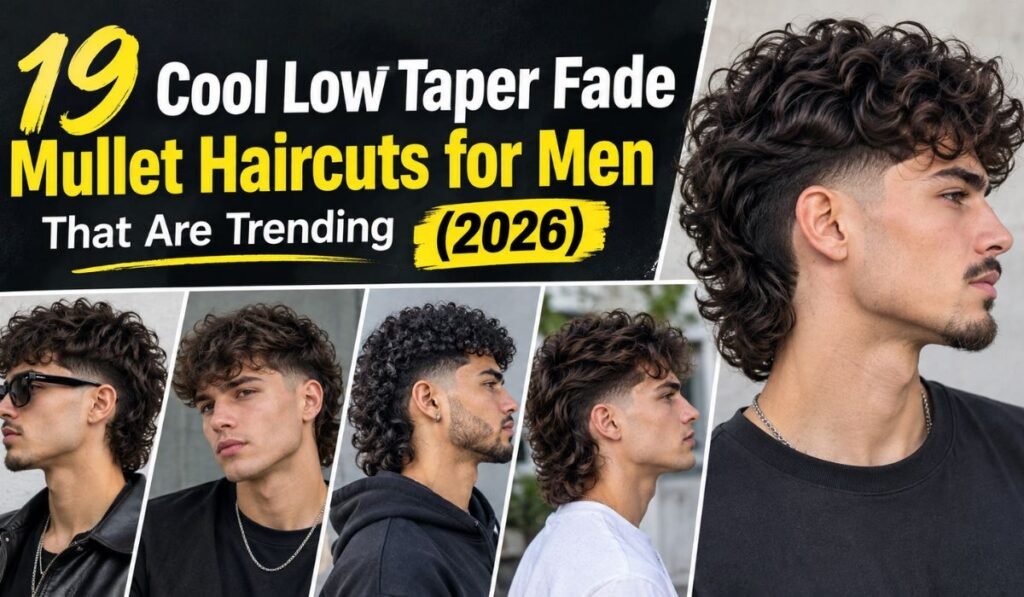
The mullet is no longer the haircut people joke about — it’s the haircut people are booking a week in advance for. And the version driving that shift is the low taper fade mullet: short, blended sides up front, real length and texture in the back. It reads clean at the office and bold at the show, which is exactly why Fade Mullet Haircuts have taken over barbershop mood boards heading into 2026.
If you’ve been scrolling through photos trying to figure out which version fits your hair, your job, or your face shape, this guide breaks down 19 of the best Fade Mullet Haircuts for men right now, plus how to ask for one, which face shapes and hair types suit it best, and how to keep it looking sharp between visits.
What Is a Low Taper Fade Mullet?
A low taper fade mullet is a modern mullet where the sides are faded gradually, starting low — usually an inch or two above the ear — down to the skin or a very short guard at the neckline. The top stays longer and textured, and the back is left to grow out into the classic mullet shape.
Unlike a skin fade or a high fade, the low taper keeps most of the head covered in hair. The fade only does its work near the bottom, which means the transition from short to long is soft instead of sharp. That’s the whole appeal of Fade Mullet Haircuts: they look intentional, not accidental, even as they grow out.
Key features of this cut:
- Sides: Tapered gradually, usually with a #1 to #3 guard blending into skin near the neckline
- Top: Left longer (2–4 inches), often textured or brushed forward
- Back: Extra length (4–8+ inches) for the signature mullet tail
- Blend: No harsh line between the fade and the longer hair on top
Low Taper Fade Mullet vs Traditional Mullet
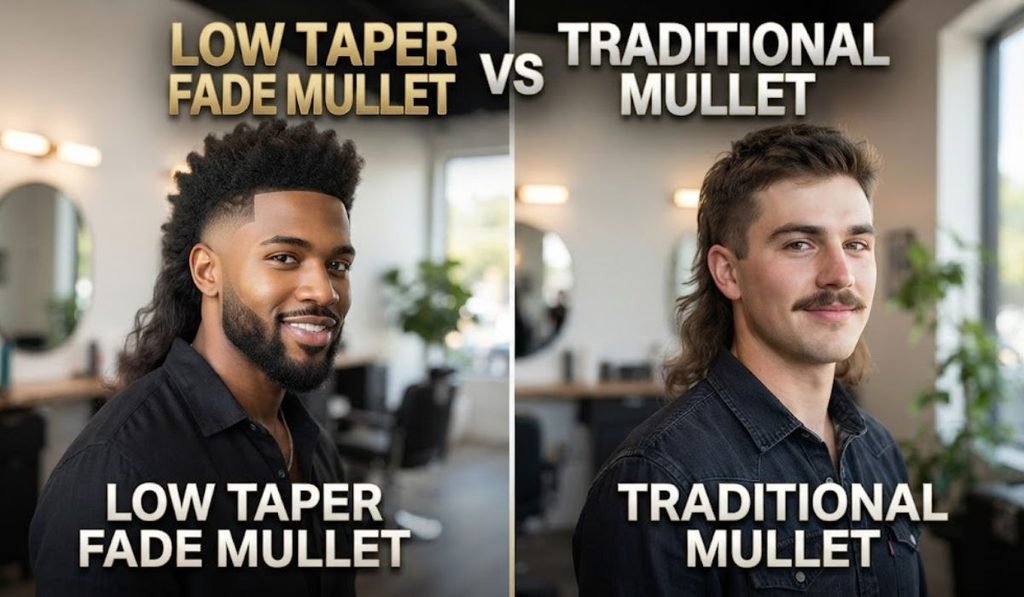
The two cuts share a silhouette but feel completely different once they’re actually on someone’s head. Here’s how they compare:
| Feature | Low Taper Fade Mullet | Traditional Mullet |
| Sides | Gradually faded, blended, low contrast | Cut with clippers or scissors, minimal blending |
| Overall look | Modern, polished, subtle | Retro, bold, often choppy |
| Workplace friendly | Yes, in most industries | Rarely |
| Grow-out appearance | Still looks neat | Looks unkempt quickly |
| Styling effort | Low to moderate | Moderate to high |
| Popular hair types | Works with all textures | Best on straight, thick hair |
Traditional mullets rely on contrast for their statement — short sides, long back, no in-between. Fade Mullet Haircuts soften that contrast with a gradient, which is why so many men are switching over.
Read Related Post: Low Taper Fade Haircut for Black Men: Best Styles, Barber Tips, and Maintenance
Why Barbers Recommend a Low Taper Fade Mullet
Ask any barber why this cut keeps coming up, and the answers are pretty consistent:
- It grows out gracefully. Because there’s no hard line, you don’t need a touch-up every two weeks to avoid looking sloppy.
- It works across hair types. Straight, wavy, curly, and thick hair all take to the taper differently, but all of them work.
- It’s versatile for styling. You can slick it back for a formal event or leave it messy for everyday wear.
- It suits more face shapes than a skin fade. The low fade doesn’t expose as much scalp, which is more forgiving for rounder or narrower faces.
- It’s a low-commitment way to try a mullet. If you’re nervous about going full mullet, the tapered sides make the whole look feel more “haircut” and less “phase.”
These reasons are why Fade Mullet Haircuts solve the two biggest complaints about traditional mullets: maintenance and workplace suitability.
1. Classic Low Taper Fade Mullet
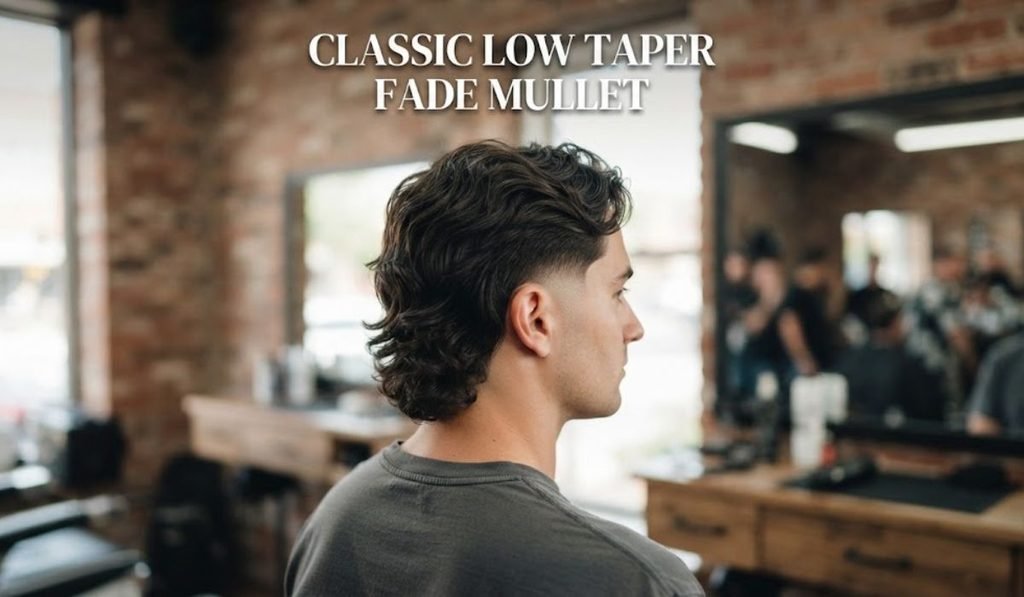
This is the baseline version of Fade Mullet Haircuts: a clean low fade on the sides, natural length on top, and a moderate mullet tail in back. No heavy texturizing, no extreme length — just a balanced, everyday cut that works for almost any guy trying this trend for the first time.
Suitable hair types: Straight, thick Styling tip: A light matte pomade keeps the top controlled without shine.
2. Textured Low Taper Fade Mullet
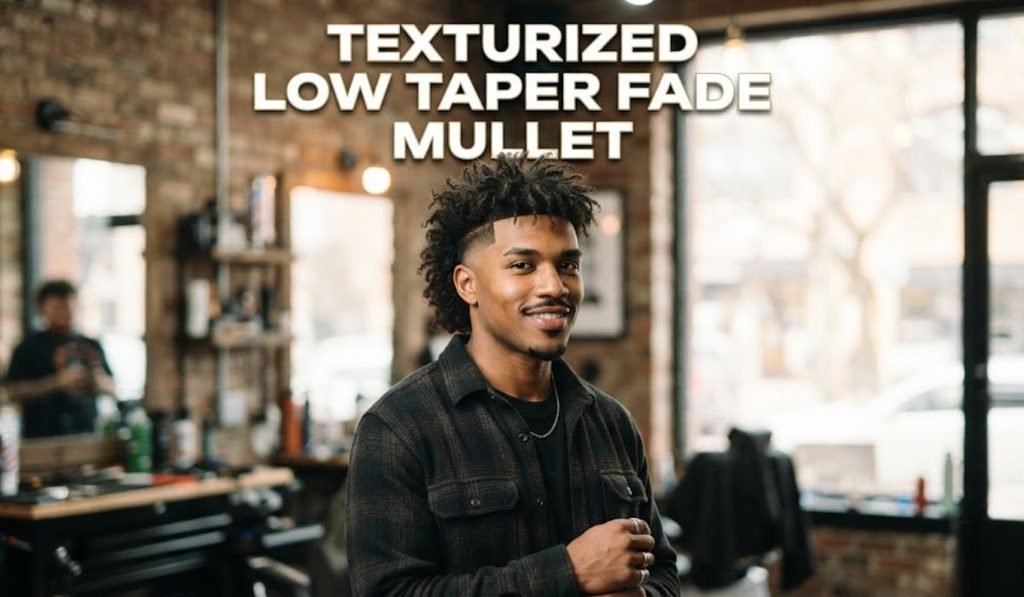
Point-cut layers through the top and back add movement and break up any flatness. This version photographs well because the texture catches light and adds depth instead of looking like one solid block of hair.
Suitable hair types: Straight, wavy Styling tip: Work a texturizing spray into damp hair before blow-drying with your fingers.
3. Curly Low Taper Fade Mullet
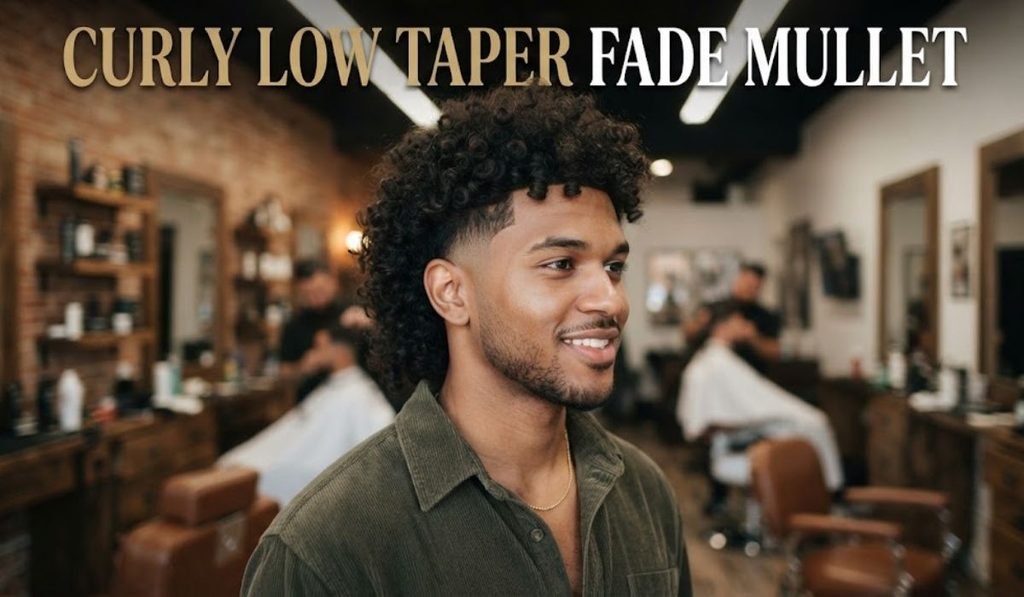
The fade trims the sides tight without disturbing your curl pattern, so the contrast between the close-cropped sides and the bouncy curls on top really stands out. Among Fade Mullet Haircuts for naturally curly hair, this one gets requested most often because it controls volume on the sides while letting the curls do their thing up top.
Suitable hair types: Curly, coily Styling tip: Use a curl cream, not gel, to avoid crunch or stiffness.
4. Wavy Low Taper Fade Mullet
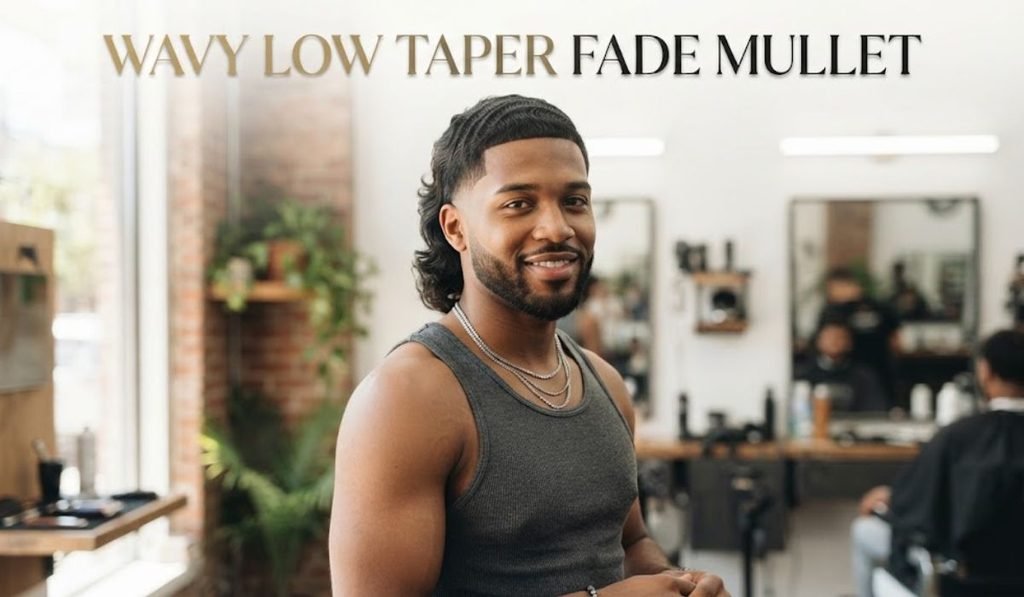
Waves give this cut natural movement without any real effort. The taper keeps things tidy while the waves in the back create that effortless, beachy mullet look people associate with surfers and skaters.
Suitable hair types: Wavy Styling tip: Sea-salt spray enhances the wave pattern and adds texture.
5. Straight Hair Low Taper Fade Mullet
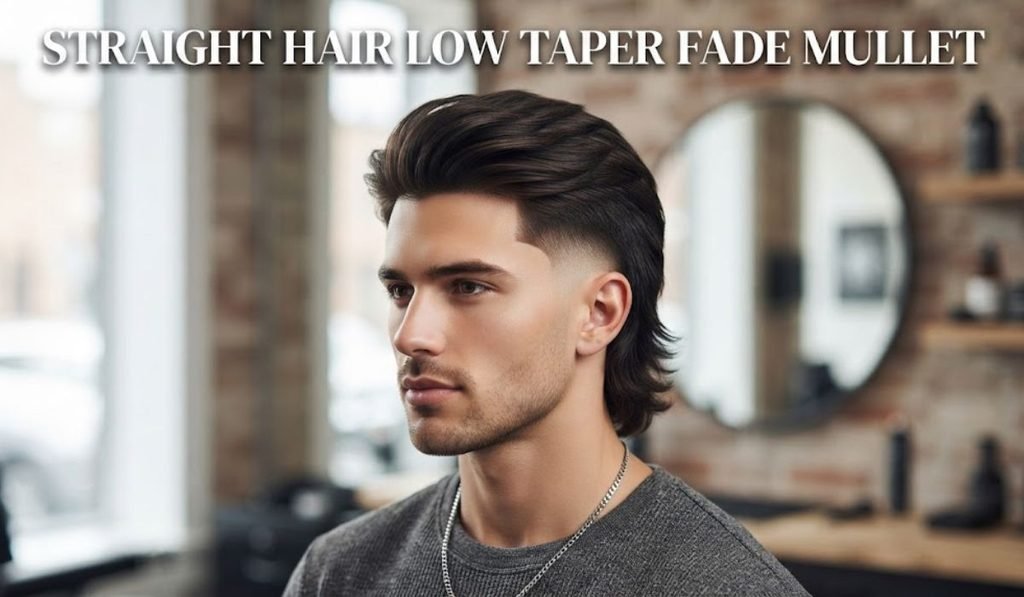
Straight hair gives this cut its sleekest, most streamlined finish. Without curl or wave to add bulk, the mullet tail lays flat and defined, which makes the length in back look longer and more deliberate.
Suitable hair types: Straight Styling tip: A light shine serum keeps straight strands from looking dry or flyaway.
6. Thick Hair Low Taper Fade Mullet
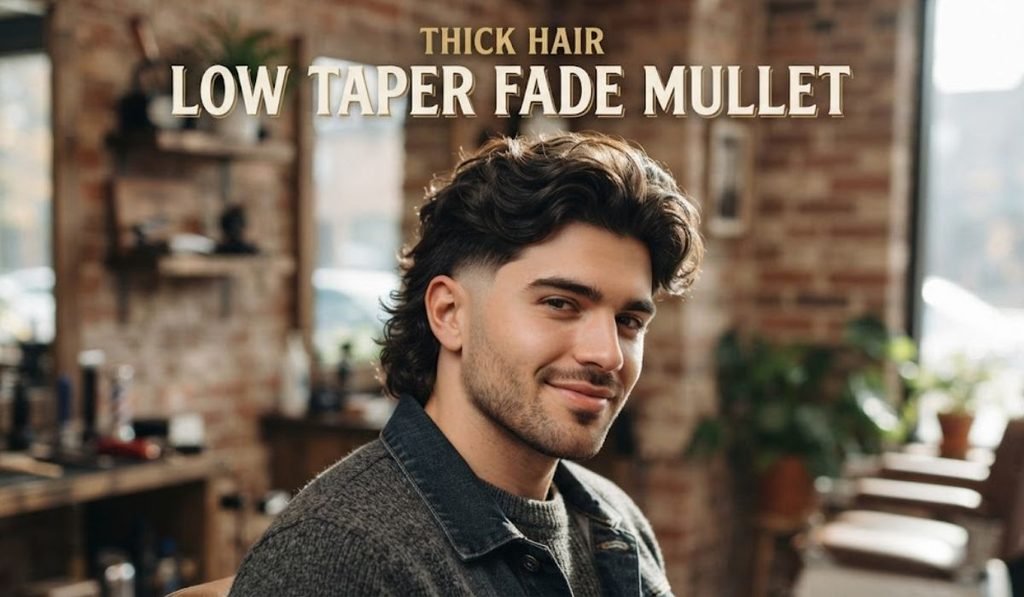
Thick hair holds shape well, so this version tends to look fuller and more voluminous on top. Barbers often thin out the crown slightly so the cut doesn’t feel too heavy while keeping the fade crisp underneath.
Suitable hair types: Thick, coarse Styling tip: Ask your barber for point cutting to reduce bulk without losing length.
7. Messy Low Taper Fade Mullet
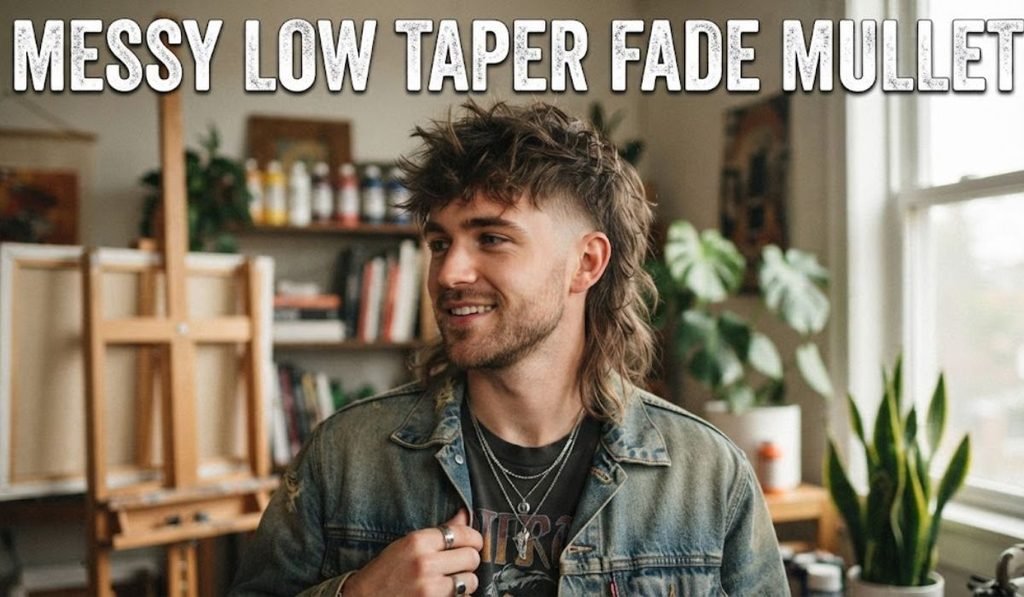
This is the laid-back, “just rolled out of bed” version. The sides stay tapered and neat, but the top and back are styled with texture paste for a deliberately undone finish. It’s one of the more casual Fade Mullet Haircuts and works well for guys who don’t want a fussy morning routine.
Suitable hair types: All textures Styling tip: Scrunch a matte paste through damp hair, then air dry.
8. Wolf Cut Low Taper Fade Mullet
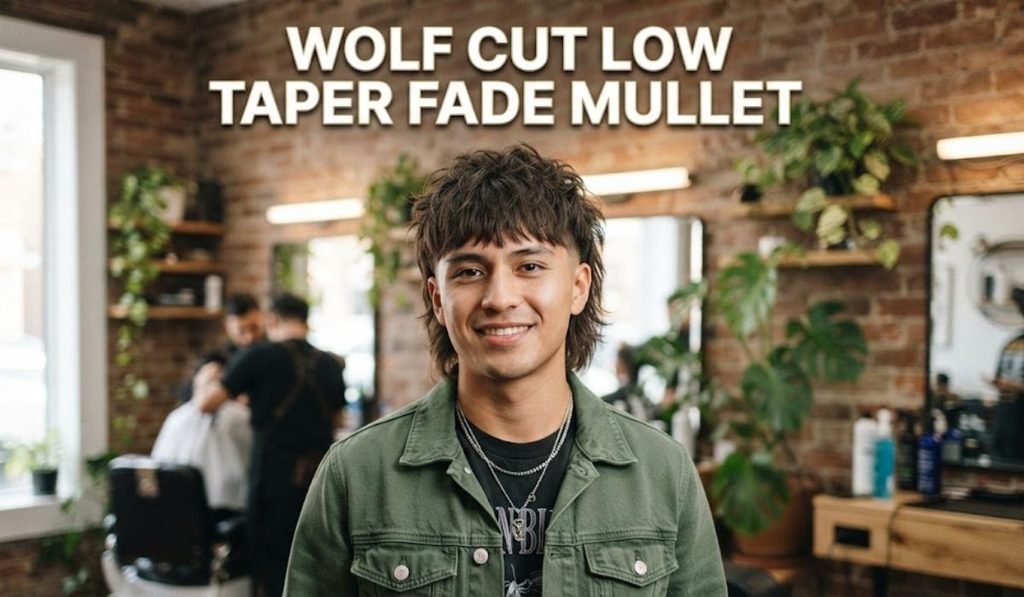
A hybrid of the wolf cut and mullet, this style is one of the shaggiest Fade Mullet Haircuts on the list — heavy layering and texture throughout, with the low taper keeping the sides from feeling overgrown. Expect a lot of volume at the crown and choppy ends everywhere else.
Suitable hair types: Wavy, curly Styling tip: A round brush while blow-drying boosts volume at the roots.
9. Modern Low Taper Fade Mullet
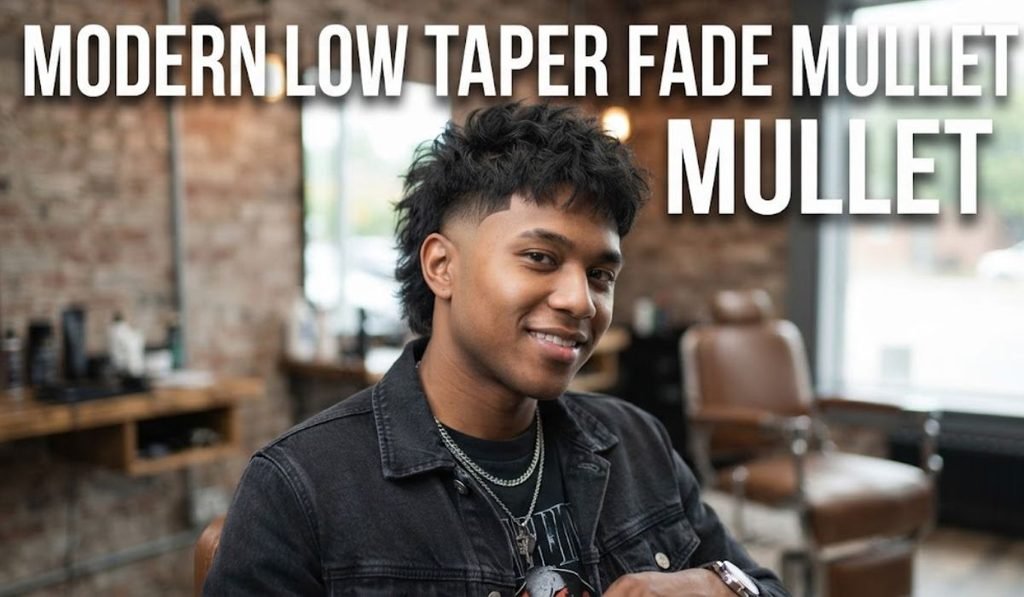
The most refined version on this list. Sides are kept extremely clean, the top is styled forward or side-swept, and the back is trimmed just enough to keep a mullet shape without looking rugged — the go-to pick for office-friendly Fade Mullet Haircuts.
Suitable hair types: Straight, wavy Styling tip: Blow-dry the top forward, then set with a light-hold cream.
Which Style Fits Your Hair Type?
| Hair Type | Best Style Options |
| Straight | Classic, Modern, Straight Hair Mullet |
| Wavy | Wavy Mullet, Wolf Cut, Textured Mullet |
| Curly | Curly Mullet, Wolf Cut |
| Thick | Thick Hair Mullet, Classic |
| Fine/Thin | Textured Mullet, Messy Mullet (adds visual volume) |
10. Soft Layered Low Taper Fade Mullet
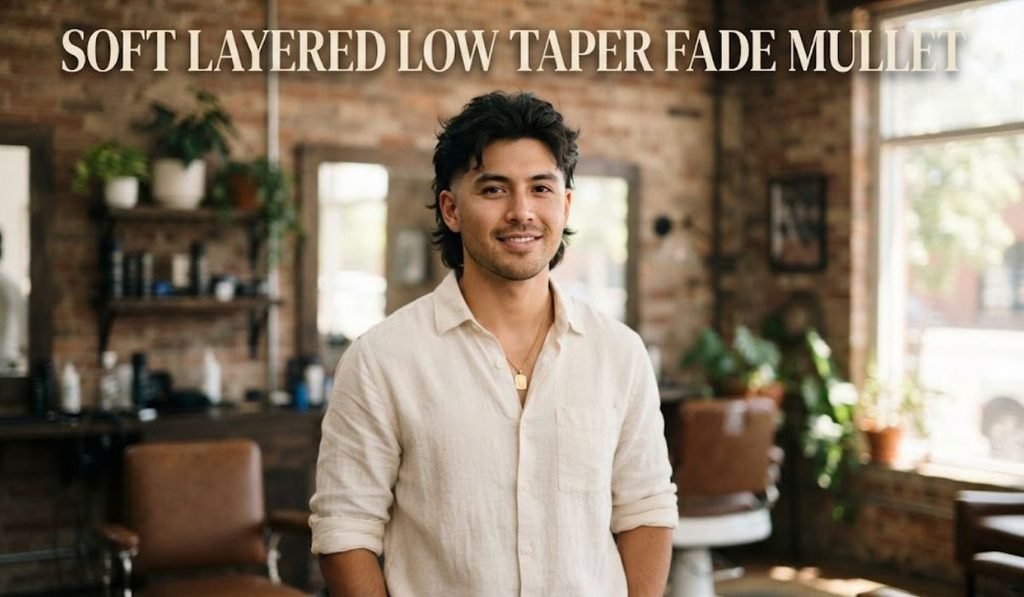
Instead of one thick chunk of length in back, this version uses soft, blended layers that taper gradually from the crown to the tips. It’s a gentler take that suits men who want the mullet silhouette without heavy bulk.
Suitable hair types: Straight, fine Styling tip: Round-brush the layers for extra lift at the crown.
11. Asian Low Taper Fade Mullet
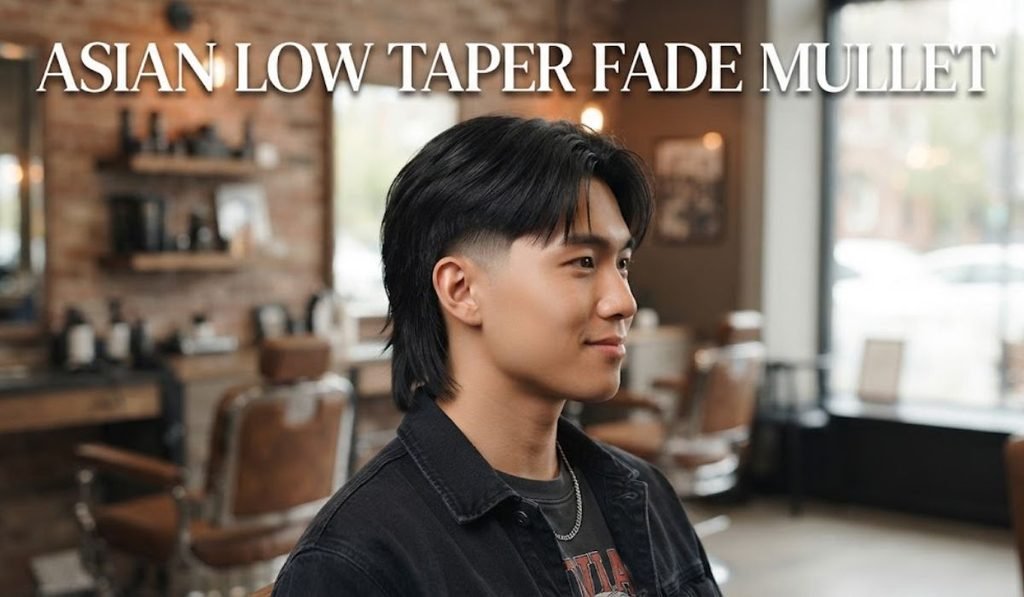
Built around naturally thick, straight hair textures, this version often keeps more length and volume on top while the fade stays extremely tight and precise. Expect a fuller silhouette than Western takes on the cut.
Suitable hair types: Thick, straight Styling tip: A matte clay controls thickness without weighing hair down.
12. Low Taper Fade Mullet with Textured Fringe
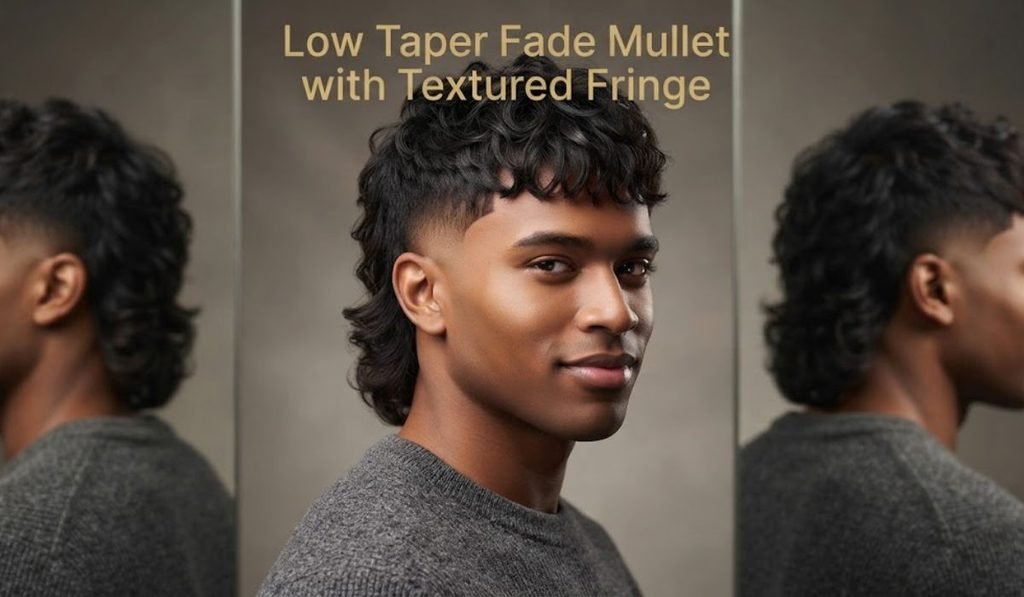
A choppy, textured fringe at the front adds a youthful, edgy detail to the classic shape. This works especially well for guys who want a statement piece at the front to match the drama of the mullet in back.
Suitable hair types: Straight, wavy Styling tip: Use a fine-tooth comb and wax to separate fringe pieces cleanly.
13. Athletic Low Taper Fade Mullet
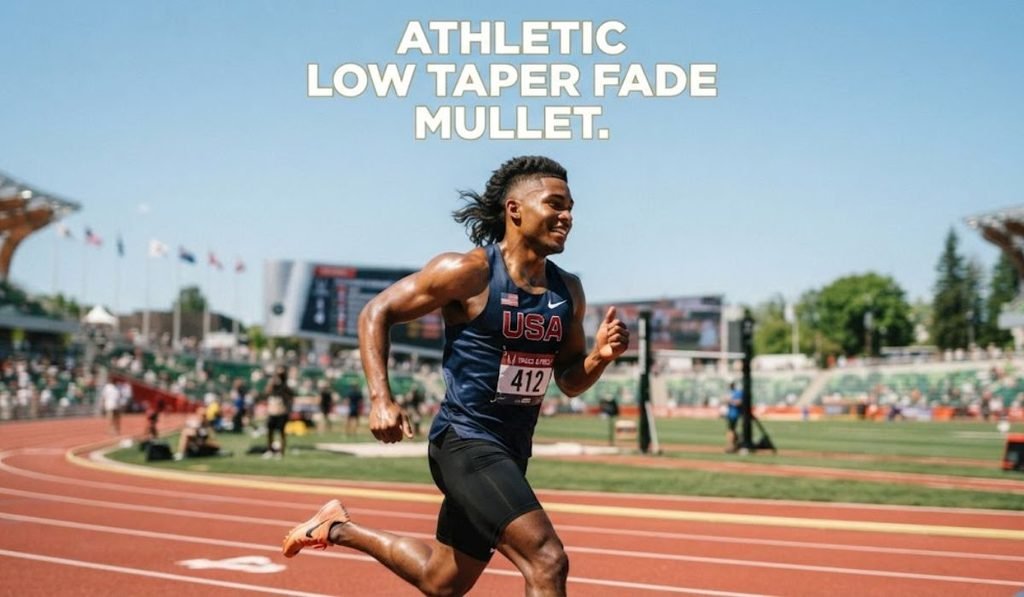
Built for guys who need a low-maintenance cut that survives sweat, helmets, and long practices. The sides are tapered tight for comfort, and the back is kept a bit shorter than other mullet versions so it doesn’t get in the way during activity.
Suitable hair types: All textures Styling tip: Skip heavy product; a light texturizing spray is enough.
14. Professional Low Taper Fade Mullet
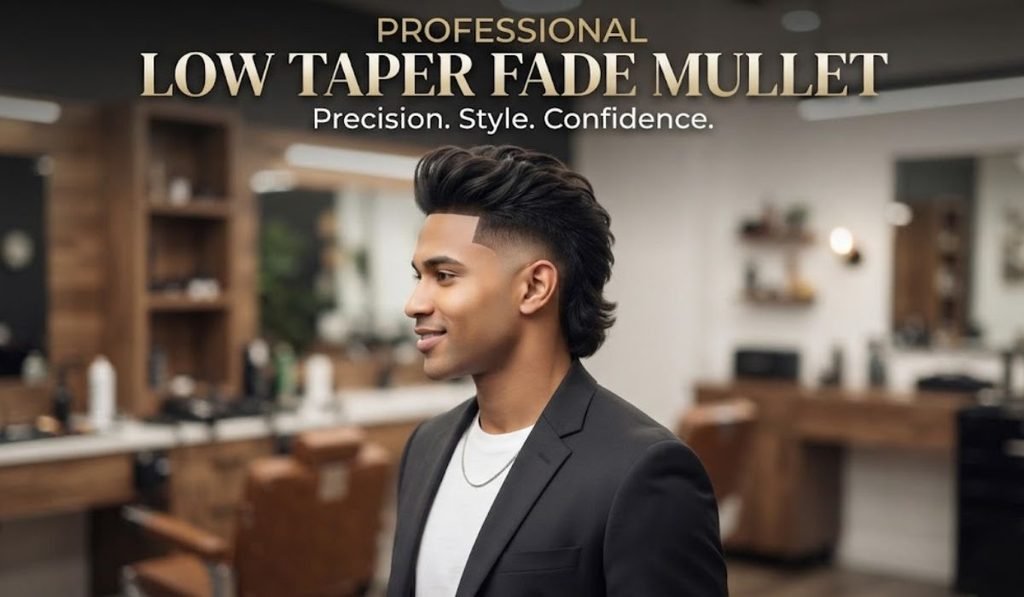
The most conservative option here, designed to pass office dress codes without sacrificing the mullet entirely. The back length is kept moderate, the sides are sharp, and everything is styled neatly rather than left messy.
Suitable hair types: Straight, wavy Styling tip: A comb-through with pomade keeps this cut boardroom-ready.
15. Low Taper Fade Mullet with Natural Volume
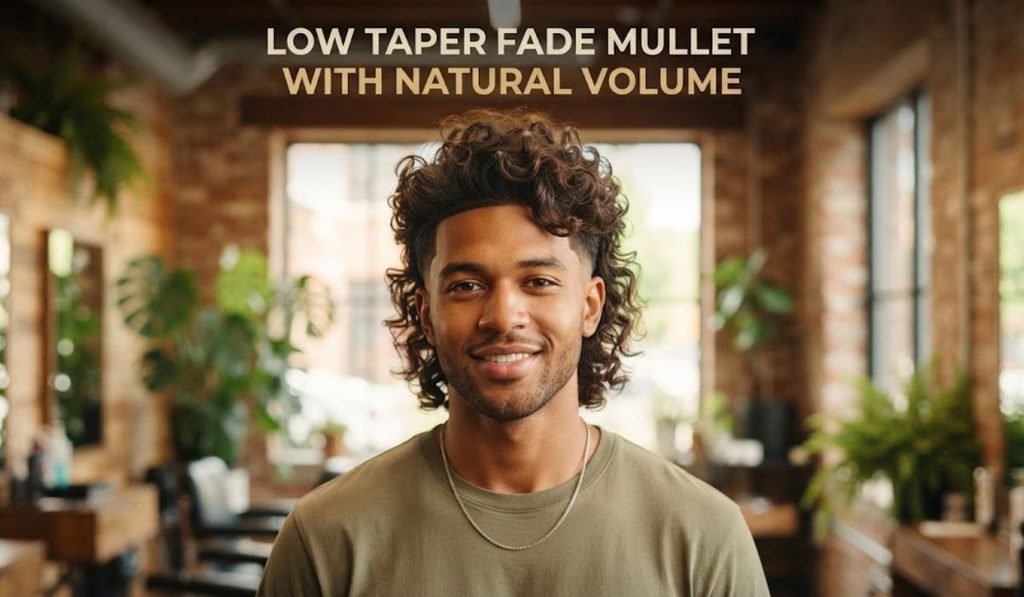
This version skips heavy styling products altogether and lets natural texture and volume do the work. It suits guys with hair that already has body, since the goal is movement, not control.
Suitable hair types: Wavy, curly, thick Styling tip: Air-dry instead of blow-drying to preserve natural shape.
16. Low Taper Fade Mullet With Beard
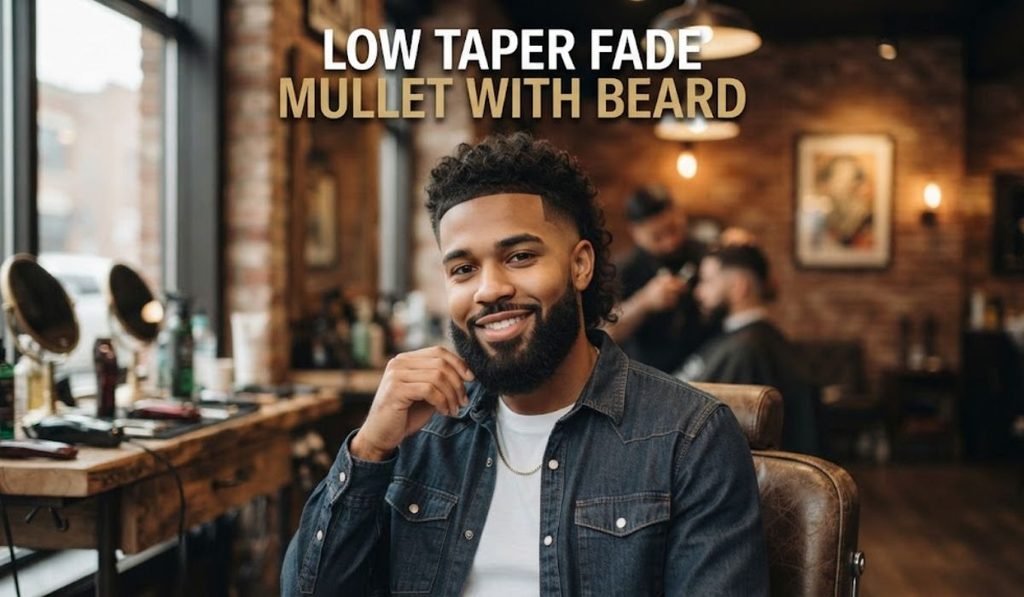
Pairing this cut with a full or medium beard balances the face and adds a rugged, masculine finish. Barbers usually recommend keeping the beard fade consistent with the hair fade for a cohesive look.
Suitable hair types: All textures Styling tip: Beard oil keeps facial hair soft and prevents flyaways that clash with a clean fade.
17. Short Mullet Low Fade
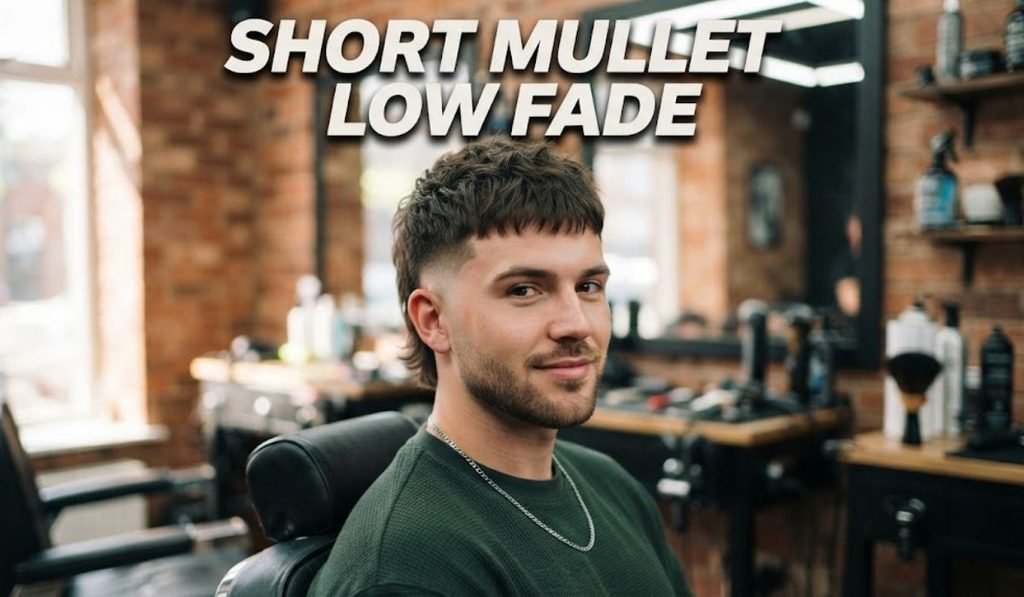
For men easing into the trend, this version keeps the back length short — just enough to signal “mullet” without committing to a long tail. It’s one of the more subtle Fade Mullet Haircuts on this list and grows into longer versions easily.
Suitable hair types: All textures Styling tip: A texturizing powder adds definition without much effort.
18. Mid Taper Fade Mullet
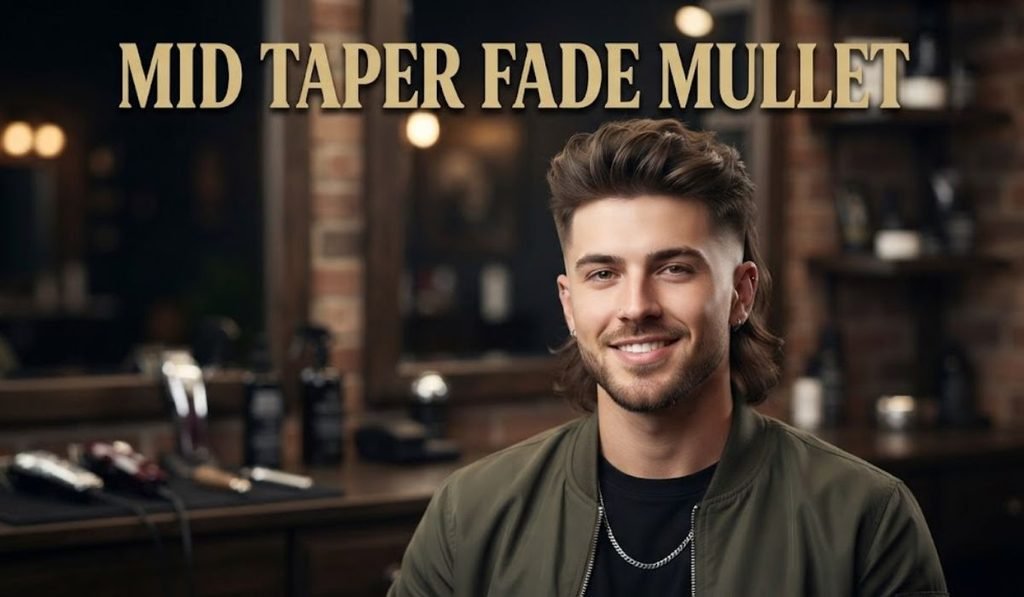
Slightly higher than a low fade but not as sharp as a high fade, this variation starts blending around mid-ear level. It offers a bit more contrast while still avoiding the harsh lines of a skin fade.
Suitable hair types: Straight, thick Styling tip: Ask your barber to blend with clipper-over-comb for a soft transition.
19. Mullet Haircut Long Hair Low Taper Fade
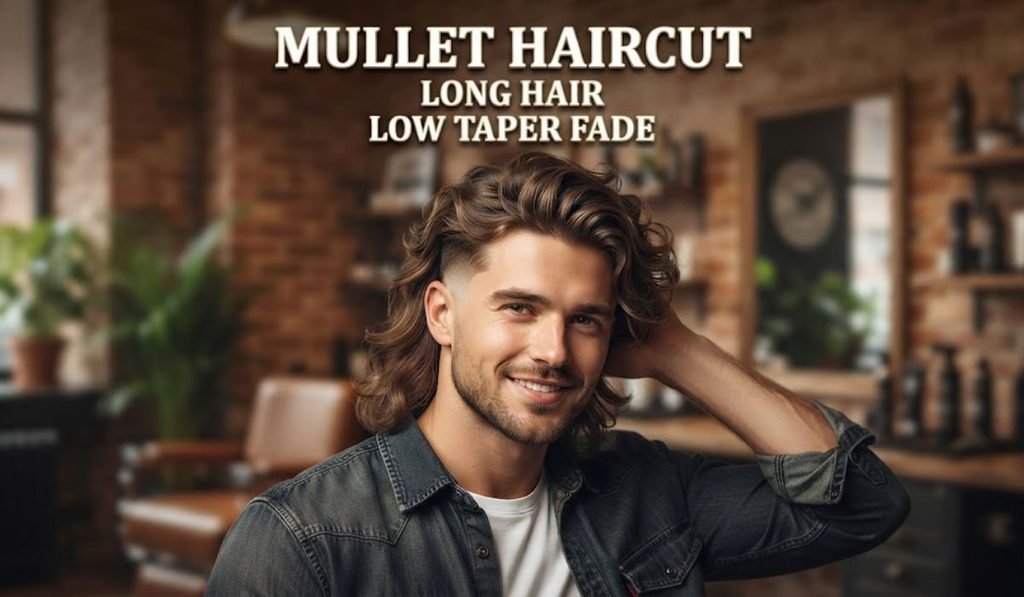
The boldest option on the list, this version keeps the back grown out significantly — often past the collar — while the sides stay tightly tapered. It’s a favorite among musicians and creatives who want maximum contrast.
Suitable hair types: Straight, wavy, thick Styling tip: Regular deep conditioning keeps the longer length healthy and manageable.
How to Ask Your Barber for a Low Taper Fade Mullet
Miscommunication is the number one reason people walk out of the chair disappointed. Use these steps to get it right:
- Bring a reference photo — specifically one showing the back, not just the front.
- Specify the fade height. Say “low taper” clearly, since “fade” alone can mean anything from skin-tight to barely-there.
- Give a length range for the back. Numbers or inches work better than vague terms like “medium.”
- Mention your hair type. Curly, straight, and thick hair all blend differently.
- Ask about maintenance. A good barber will tell you how the cut will grow out and when to come back.
Clear communication is what separates great Fade Mullet Haircuts from awkward ones, so don’t be afraid to be specific.
Best Face Shapes for a Low Taper Fade Mullet
| Face Shape | Why It Works |
| Oval | Naturally balanced, suits almost any version |
| Square | Softens strong jawlines with volume on top |
| Round | Longer back and height on top elongate the face |
| Diamond | Textured fringe versions balance narrow forehead and chin |
| Rectangular | Shorter back length avoids over-lengthening the face |
Best Hair Types for This Haircut
Nearly every hair type can pull off some version of this cut, but a few adapt especially well:
- Straight hair — Sleek, streamlined finish with clear definition
- Wavy hair — Natural texture with minimal styling effort
- Curly hair — Bold contrast between tight sides and voluminous top
- Thick hair — Fuller silhouette, holds shape all day
- Fine hair — Layered or textured versions add the appearance of volume
Best Styling Products
- Matte pomade — Control without shine, good for classic and professional styles
- Texturizing spray — Adds grit and separation for messy or wolf-cut versions
- Curl cream — Defines curls without stiffness
- Light-hold styling cream — Natural movement for wavy or soft layered styles
- Beard oil — Keeps facial hair polished when pairing the cut with a beard
Maintenance Tips
- Get the fade trimmed every 2–3 weeks to keep the sides sharp
- Let the back grow at your own pace — there’s no strict trim schedule for length
- Deep condition regularly if you’re growing out a longer mullet
- Use a heat protectant before blow-drying to prevent damage over time
- Wash with a lightweight shampoo so product doesn’t build up and weigh hair down
FAQ’s
Is a low taper fade mullet suitable for professional environments?
Yes. The low fade and blended sides make it far more office-appropriate than a traditional mullet, especially with the professional or modern variations.
Does this haircut suit curly hair?
Absolutely. Curly hair actually enhances the contrast between the tapered sides and the textured top, making the curly variation one of the most popular Fade Mullet Haircuts styles.
How often should I get it trimmed?
Plan on a fade touch-up every 2–3 weeks. The back can go much longer between trims since it’s meant to grow out.
What’s the difference between a low taper fade mullet and a burst fade mullet?
A low taper fades gradually and evenly around the head, while a burst fade curves sharply around the ear, creating a more dramatic, rounded transition.
Is this haircut high maintenance?
Not really. Compared to skin fades or heavily styled cuts, it’s fairly low maintenance — occasional fade trims and light daily styling are usually enough.
Conclusion
The low taper fade mullet has earned its spot as one of the most requested men’s haircuts of 2026 because it solves a real problem: how do you get the bold, expressive back of a mullet without looking out of place at work or letting the cut turn shaggy the moment it grows out? Between the 19 styles covered here — from the classic and professional versions to curly, wolf-cut, and long-hair takes — there’s a version of Fade Mullet Haircuts for pretty much every hair type, face shape, and lifestyle.
Bring a clear reference photo, be specific about fade height and back length, and keep up with regular trims, and this cut will stay sharp for months. Whether you want something subtle for the office or something bold enough to turn heads, a low taper fade mullet is one of the easiest ways to update your look in 2026.

I’m Joyce
I’m an SEO-focused writer and content creator with experience in creating useful, search-friendly content that helps readers find the information they are looking for. I enjoy researching trends, understanding what people search for, and turning that research into clear and helpful articles.
At Curl Slayers, I focus on haircuts, hairstyles, fades, and curly hair. I research modern hair trends, different haircut styles, and practical styling ideas to help readers discover fresh looks and choose styles that suit them.
My goal is simple: to make hair inspiration easier to find, understand, and use. Whether you’re looking for a new haircut, a clean fade, a trendy hairstyle, or ideas for your curls, Curl Slayers is here to help you find your next look.

1 thought on “19 Cool Low Taper Fade Mullet Haircuts for Men That Are Trending (2026)”